
Candle Reaches 1 Million Users and $3 Million in Annualized Revenue
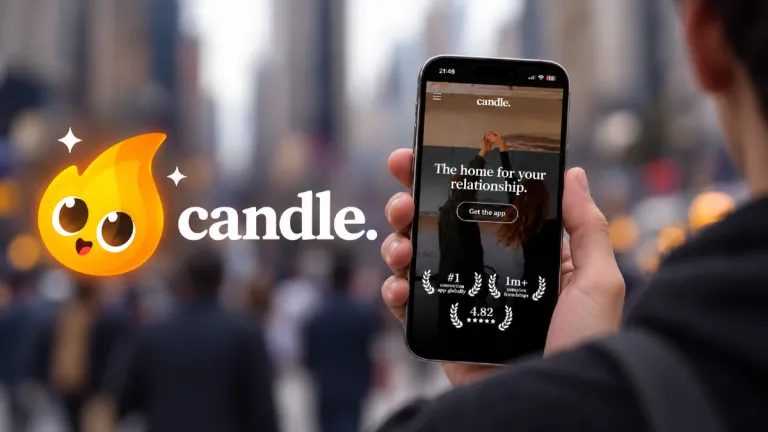
Most social media platforms are designed to help people meet strangers, discover content, and grow their online networks. Candle is taking a different approach by focusing on something much more personal: helping people strengthen the relationships they already have.
Founded in San Francisco in 2025, Candle is a mobile application designed for couples and close friends who want to stay connected through daily conversations, games, and shared experiences. Instead of encouraging endless scrolling, the application gives two people simple activities they can complete together in just a few minutes.
What makes Candle particularly interesting is how quickly this relatively straightforward concept has developed into a substantial consumer business.
According to information published by Y Combinator, Candle has surpassed 1 million users and reached more than $3 million in annualized revenue. The company achieved these milestones within approximately its first year, operating with a full-time team of just four people at the time of its reported growth figures.
For a young consumer application, these are significant results. Attracting downloads is one challenge, but encouraging people to return regularly and eventually pay for additional features is considerably more difficult.
Candle appears to have found an opportunity in a category that sits somewhere between social networking, casual gaming, and relationship wellness. Its central idea is that improving personal relationships does not necessarily require complicated technology or lengthy conversations. Sometimes, a small interaction every day can be enough to get people talking.
The company’s progress is even more remarkable considering that Candle was not the business its founders originally intended to create.
The Founders Tried More Than Ten Ideas Before Finding Success
Candle was founded by Alex Ruber and Parth Chopra, two engineers who had already gained experience at some of the technology industry’s best-known companies.
Ruber previously worked at Apple, while Chopra held engineering positions at Twitter and Asana. The pair had collaborated on projects before deciding to pursue their ambitions as startup founders.
Their original venture was called Encore, an artificial intelligence-powered shopping platform designed to help consumers find secondhand products across multiple online marketplaces. The idea was promising enough to secure a place in Y Combinator’s Fall 2024 accelerator program and attract approximately $2 million in funding.
However, developing a technically impressive product did not automatically translate into an attractive business.
The founders discovered that competing in the secondhand shopping market was considerably more difficult than anticipated. Established marketplaces already controlled large audiences, while building a profitable business around product discovery presented additional economic challenges.
Rather than continuing indefinitely with a struggling concept, Ruber and Chopra began experimenting with alternative ideas.
According to an interview published by TechCrunch in September 2025, the founders tested more than ten different concepts over approximately four or five months. Their experiments covered industries ranging from fashion to sports, but none demonstrated the traction they needed.
The repeated changes created an increasingly stressful situation. The company had raised money, joined a prestigious startup accelerator, and assembled the technical expertise needed to develop products, yet it still lacked a business that customers genuinely wanted.
Ironically, the demanding process of searching for a successful idea contributed to the inspiration behind Candle.
The founders noticed that their intense work schedules were making it more difficult to maintain meaningful connections with their own partners and friends. The problem was familiar: people could care deeply about someone while struggling to find time or fresh ways to communicate.
They began exploring whether a simple mobile experience could encourage more regular interaction between two people.
The earliest version was little more than a collection of questions presented as cards. Users could answer prompts, compare responses, and discover things about one another that might not naturally arise during an ordinary conversation.
Unlike the founders’ previous experiments, this idea began attracting genuine interest.
The breakthrough became even more apparent when a member of the team shared a video about the application on TikTok. The video gained unexpected attention, including substantial interest from European users, and helped introduce the product to a much larger audience.
What began as another experiment had suddenly become the founders’ most promising business.
How Candle Turns Small Moments Into Daily Habits
Candle is designed around a simple concept: two people connect through the application and participate in shared activities intended to encourage conversation and interaction.
The experience begins with daily questions that range from lighthearted topics to more personal discussions. Users answer questions independently and can then discover how their partner responded.
Some questions encourage people to share memories or discuss preferences, while others explore feelings, expectations, and experiences. The purpose is not to test how well two people know one another, but to introduce conversations that might otherwise never happen.
Over time, Candle has expanded beyond its original question-based format.
The application now includes mini-games, drawing challenges, shared photographs, interactive widgets, and other activities that two people can enjoy together. Games such as Who’s More Likely introduce a playful competitive element, while drawing features allow users to exchange more creative responses.
For couples maintaining long-distance relationships, Candle provides several additional features intended to make physical separation feel less significant.
Users can exchange photographs, leave notes and drawings, and display shared content through widgets on their phones. A feature called Thumb Kiss allows two people to touch their screens simultaneously and receive a gentle vibration, creating a small interactive gesture even when they are far apart.
The application also includes countdowns for upcoming events, shared memories, and date suggestions designed to encourage couples to spend time together outside the digital environment.
Another important part of the experience involves streaks and achievements.
When users return regularly, Candle tracks their continued participation and recognizes milestones. This introduces a familiar element from mobile gaming, where repeated activity creates a visible sense of progress.
In 2026, the company continued developing its experience with additional games, improved photo-sharing features, expanded widgets, shared memories, and a points system called Sparks.
These additions give people more reasons to return without changing the fundamental purpose of the application.
Rather than attempting to replace ordinary communication, Candle provides a structured starting point for it. A question can lead to a longer conversation, a game can create a shared joke, and a photograph can become a memory that the couple revisits later.
The application therefore works best when the digital interaction encourages something meaningful between the two people using it.
From a Viral TikTok to More Than One Million Users
Candle’s early growth provides an interesting example of how social media exposure can transform a small consumer application when the underlying product resonates with its audience.
The initial surge came after a TikTok video introduced the concept to users who were looking for new ways to interact with their partners. Unlike products that require lengthy explanations, Candle could demonstrate its basic appeal through a relatively short video.
The message was easy to understand. Download an application, connect with someone important, and discover new things about each other through daily questions and games.
By September 2025, approximately six months after launching, Candle had attracted 300,000 users, representing around 150,000 couples.
TechCrunch reported that the company had more than 250,000 monthly active users and a daily-to-monthly active user ratio of approximately 50%, according to figures supplied by the startup.
The latter measurement is particularly interesting because it provides an indication of how frequently people were returning.
A mobile application might accumulate thousands of downloads through advertising or viral attention without convincing people to continue using it. Candle’s reported engagement suggested that a meaningful proportion of its audience had incorporated the experience into their routines.
The company also appeared multiple times among the top 25 applications in Apple’s App Store rankings, providing additional visibility beyond its social media campaigns.
Revenue development was similarly encouraging.
By September 2025, Candle’s monthly revenue had passed $150,000, according to TechCrunch. This placed the business above a $1 million annualized revenue pace within its first six months.
Subsequent company information published through Y Combinator reported that Candle had crossed 1 million users and exceeded $3 million in annualized revenue within approximately its first year.
Annualized revenue represents a projection based on the company’s revenue pace at a particular point in time, rather than necessarily reflecting money already received over a completed twelve-month period.
Even with that distinction, the figures represent substantial progress for a startup operating with a very small team.
There are also signs of broader consumer adoption beyond the company’s own announcements. Candle has accumulated hundreds of thousands of downloads on Google Play, while its iOS application has received thousands of public ratings and reviews.
These public indicators do not independently confirm every company-reported revenue or engagement figure, but they support the conclusion that Candle has developed a meaningful audience.
Perhaps the most important aspect of its growth is that users are not simply consuming content created by the company. They are creating experiences with people they already know, giving the product a personal purpose that extends beyond entertainment.
How Candle Makes Money Without Traditional Advertising
Candle operates with a freemium business model that combines free access with optional paid features.
Users can experience the central concept without subscribing. Daily questions, selected games, and basic interaction features provide enough functionality for two people to understand the product and begin using it regularly.
Additional content and features are available through premium purchases, allowing Candle to generate revenue from users who want a broader experience.
This approach offers several advantages.
Making the basic product free reduces the barrier to adoption, particularly because Candle generally requires two people to participate. Someone who discovers the application can invite a partner without immediately requiring both individuals to pay.
Once the pair begins using Candle regularly, additional games, activities, and personalization can create opportunities for premium conversion.
The application also benefits from a built-in invitation mechanism.
Unlike a conventional single-player application, Candle becomes more useful when another person joins. Each new user therefore has a practical reason to introduce the service to someone else.
This can help generate organic growth, although the effectiveness of that process ultimately depends on how many invitations become active, lasting connections.
Candle’s business model is also notable for what it does not emphasize.
The company promotes an advertising-free experience, positioning the application as a private space where couples can communicate without conventional social media distractions.
Instead of generating revenue by displaying advertisements against user attention, Candle relies on people finding enough value in its features to purchase additional access.
For a relationship-focused application, this distinction is important.
Users are encouraged to spend a small amount of meaningful time together rather than maximize the number of minutes they spend looking at their screens.
The company’s early revenue growth suggests that a portion of its audience considers these experiences valuable enough to pay for.
However, long-term commercial success will depend on more than initial subscriptions. Candle must continue offering enough value to retain paying customers after their early enthusiasm fades.
That is particularly important because relationships themselves change over time. The activities that appeal to a new couple may be different from those that interest partners who have been together for several years.
The company’s ability to serve these different situations could eventually become an important factor in its financial performance.
Why Candle Is Different From Traditional Social Media
Social media has historically focused on expanding connections.
Facebook introduced people to larger digital networks, Instagram emphasized sharing photographs and following creators, and TikTok transformed short-form entertainment through personalized recommendations.
Candle operates from a different starting point.
Its purpose is not to help someone collect more followers or discover a constant stream of unfamiliar content. Instead, it concentrates on the quality of interaction between people who already share a relationship.
This places Candle in a developing category of applications focused on private social experiences and personal connection.
There are already competing products serving similar audiences. Applications such as Paired and Couple Joy also offer activities and tools designed to help couples communicate and spend time together.
Candle therefore cannot rely on the novelty of relationship questions alone.
Its differentiation comes from combining conversation prompts with casual games, shared memories, interactive phone features, and activities that can become part of everyday life.
This combination gives the product several potential uses.
A couple living together might answer a question over dinner. Partners living in different countries might exchange photographs or play a game before going to sleep. Friends who rarely see each other might use shared activities to maintain regular contact.
The experience can adapt to different relationships without requiring an extensive public network.
Candle’s growth also highlights the importance of emotional motivation in consumer technology.
People frequently download applications because they want to become more productive, healthier, or better organized. Candle addresses another motivation: the desire to feel connected to someone important.
That motivation can be powerful, but it also creates higher expectations.
If the application becomes repetitive, intrusive, or overly focused on maintaining streaks, it could undermine the relaxed interaction that originally attracted users.
The challenge is to make participation enjoyable without turning relationships into another obligation that users feel pressured to complete.
Candle’s continued expansion into games, shared spaces, memories, and real-world activities appears intended to provide enough variety for different types of users.
Whether that variety translates into sustained engagement over several years remains one of the most important questions surrounding the business.
Can Candle Become a Major Relationship Platform?
Candle has already demonstrated that an application centered on personal relationships can attract a substantial audience and generate meaningful revenue.
The next challenge is turning that early success into a durable company.
Consumer applications frequently experience rapid growth after receiving viral attention, particularly when their concepts are easy to demonstrate through short videos. However, maintaining interest over several years is much harder than generating an initial wave of downloads.
For Candle, the opportunity lies in becoming more than a collection of entertaining questions.
Its growing feature set suggests that the founders see potential for a broader platform where couples and friends can communicate, preserve memories, plan activities, and develop shared routines.
Some of these features already exist separately in messaging applications, photo libraries, calendars, and mobile games.
Candle’s opportunity is to bring relevant activities together into an experience specifically designed for two people.
The business may also have room to expand beyond romantic relationships.
Although couples currently represent an important part of its audience, the company’s stated mission includes helping close friends maintain meaningful connections. That creates a potentially larger market without requiring Candle to become a conventional public social network.
International growth presents another opportunity.
The company benefited from early interest in Europe, and its iOS application has since introduced support for additional languages, including French, Spanish, and German. Making the experience accessible to more audiences could help Candle reach users beyond its original English-speaking markets.
Still, the most interesting aspect of Candle’s story may be the path its founders took to discover the opportunity.
Alex Ruber and Parth Chopra initially pursued a technically ambitious shopping product backed by investors and supported by Y Combinator. After repeatedly experimenting with different business ideas, they discovered stronger demand for something far simpler.
Their successful concept did not depend on inventing a new form of communication. Questions, games, photographs, and shared activities had existed long before Candle.
What the founders recognized was an opportunity to organize these familiar interactions into a convenient daily experience.
With more than 1 million reported users and over $3 million in annualized revenue, Candle has moved beyond the stage of being an interesting experiment.
Its long-term success will depend on whether it can become a lasting part of people’s relationships rather than another application they eventually stop opening.
If Candle succeeds, it could demonstrate that the next major opportunity in social technology is not necessarily connecting people with more strangers, but helping them spend more meaningful time with the people already in their lives.