
Claim Avenue: The One-Person Startup That Turned a Virtual City Into a $60,000 Business
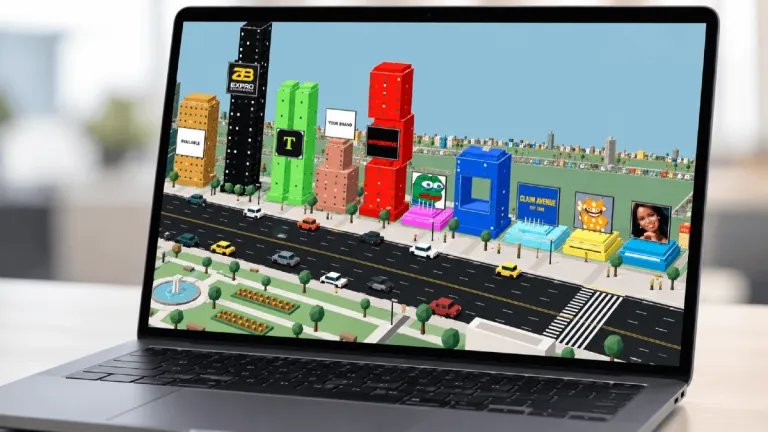
Claim Avenue is a Spanish startup turning online advertising into something closer to an interactive video game, allowing businesses, creators, and individuals to purchase virtual buildings that display their brands and direct visitors to their websites. Launched in 2026 and accessible at claimavenue.com, the project has developed from an unusual digital advertising experiment into a growing virtual city with more than 1,200 buildings and over $60,000 in reported cumulative sales. Behind it is a solo entrepreneur whose approach combines online promotion, digital ownership, gaming, and the kind of competitive mechanics that encourage people to return long after their first visit.
From an Empty Digital Street to a Growing Online Business
Most online advertising involves paying for temporary attention. A business buys an advertisement, displays it to potential customers, and eventually stops paying, at which point the promotion disappears. Even online directories, which can offer a more lasting presence, tend to present companies as names and descriptions in a long list of competing businesses.
Claim Avenue approaches the same problem from a completely different direction. Instead of purchasing a conventional advertisement or directory listing, users can buy a building in a shared virtual city. Each building occupies a numbered address and can display the owner's branding, description, and website link. Visitors move through the city, discover its buildings, and interact with the projects represented inside them.
The concept is deliberately visual. A small independent creator can occupy a building near an established business, while another company might purchase a taller structure to make its presence more noticeable. The result is an unusual mixture of digital advertising, city building, and social competition, where the participating businesses become part of the environment rather than appearing in separate advertising boxes.
Claim Avenue was founded in August 2026, according to its listing on TrustMRR, a startup platform that connects to payment processors to display business revenue. The project is based in Spain and is identified as a bootstrapped, one-person operation, making its early commercial development particularly interesting.
The first version centered on a virtual main avenue containing 1,000 purchasable plots. Each location could become a customized building representing a company, personal project, community, or individual. As more people arrived, the once-empty street began filling with businesses and recognizable structures, giving the digital environment a sense of development that traditional advertising directories rarely possess.
By October 5, 2026, all 1,000 plots on the original main avenue had been claimed. The founder publicly celebrated the milestone, explaining that the response had exceeded his initial expectations. Demand for new locations subsequently encouraged expansion beyond the original street, including the development of Riverside Drive.
By October 28, Claim Avenue's website displayed more than 1,200 buildings across its growing city. The original idea had moved beyond proving that people would pay for virtual addresses. It was becoming an experiment in whether a shared digital environment could give online businesses an additional reason to attract visitors, compete for attention, and participate in a community.
The Founder Behind Claim Avenue and His Build-in-Public Approach
Claim Avenue is associated with the entrepreneur known on X as @ferlinux, who has been documenting the product's development, commercial milestones, experiments, and changing features. The platform's legal documentation identifies Fernando Nuñez Cavas as its operator in Cartagena, Murcia, Spain, although the available public information does not establish a complete professional biography connecting that legal identity with every aspect of the founder's online presence.
The founder's public activity offers a particularly useful window into the startup's development. Rather than presenting Claim Avenue only through polished announcements, he has shared experiments, traffic results, product changes, and responses to feedback from early users. This approach, often described as building in public, allows potential customers and other entrepreneurs to follow a startup's development while its product is still evolving.
His early explanation of the idea centered on a simple question: could a location in a digital city become desirable because of its position, its surroundings, and the activities of its owner? At the beginning, there was little more than an empty map and the underlying concept. The arrival of the first buyers changed that dynamic, as people began adding businesses, experimenting with their buildings, identifying problems, and suggesting new ways the city could operate.
One particularly important aspect of the founder's approach has been his willingness to expand the product beyond its original advertising format. Early feedback exposed questions about ownership, pricing, the ability to acquire existing buildings, and how businesses could receive meaningful attention from visitors. Rather than treating those issues as separate from the product, he has incorporated new features and rules into its development.
His X account also became a distribution channel for the business itself. Posts featuring the growing city, unusual buildings, reported sales, and user activity gave people a way to discover Claim Avenue without initially visiting the platform. The product's appearance helped this strategy because the results were easy to demonstrate visually: an empty plot could become a branded tower, and an ordinary business could suddenly appear as part of a virtual skyline.
The founder has also described working on AI-related tools for brands, although detailed public records of his earlier employment, education, and business ventures remain limited. His documented activity around Claim Avenue nevertheless illustrates a recognizable entrepreneurial strategy: release an unconventional idea, observe how people use it, and improve the product while communicating openly with the audience that is forming around it.
For a solo developer, this approach has an additional advantage. Each visible milestone can become part of the startup's marketing, whether it involves selling out a street, adding vehicles, introducing a new area, or reaching a commercial target. Claim Avenue's growth has therefore been shaped not only by its technology, but also by the way its development has been shared with potential customers.
How Claim Avenue Works and Why People Buy Buildings
Using Claim Avenue begins with exploring its interactive city. Visitors can browse the environment without purchasing anything, examine existing buildings, and discover the businesses or individuals represented by them. Each published building has a numbered address that can be shared directly, allowing someone to visit a particular location without searching through the entire city.
For those interested in establishing a presence, new plots have been advertised from $5. Buyers can select an available location and configure their building using supported customization options, including its appearance, color, and structural design. Once the purchase is completed, they can personalize the building with their name, logo, description, and a link to an external website or another permitted online destination.
Imagine a small independent clothing brand that wants to promote its online store. Instead of paying for another conventional directory listing, the owner could purchase a Claim Avenue building, display the clothing company's logo, and connect it to the store. Someone exploring the virtual city might notice the building, open its information, and follow the link to browse the clothing collection.
The building also provides its owner with a recognizable digital address that can be shared on social media or included in marketing campaigns. This gives the presence a purpose beyond attracting people who happen to discover it during an ordinary visit to the city.
Claim Avenue's most distinctive commercial feature, however, is that ownership of existing buildings is competitive. Under its published rules, another user can acquire a building by paying its displayed takeover price, normally calculated at 1.25 times its current value. The previous owner cannot refuse a valid acquisition, and the buyer receives control of the existing location while retaining its plot number and structural characteristics.
Consider a building with a current value of $100. Under the standard calculation, another buyer could acquire it for approximately $125. The new owner would then be able to change its name, logo, description, color, and destination link, effectively replacing the former business with a new occupant.
The previous owner receives Claim Credits equivalent to the acquisition price. Importantly, these credits are not cash proceeds and cannot be withdrawn or converted into cryptocurrency. They are an internal balance that can be used toward eligible purchases within Claim Avenue, allowing displaced owners to establish another presence or make other supported purchases without receiving a direct financial payout.
This mechanism introduces competition into what would otherwise be a relatively straightforward advertising service. A desirable building can attract attention from multiple buyers, while a business that occupies a recognizable location may eventually find another brand willing to pay more to acquire it.
The product's legal terms also clarify that purchasing a building does not mean acquiring physical real estate, a cryptocurrency token, or an investment asset. Buyers receive contractual control of a digital address while the service operates, subject to its published conditions and takeover rules.
For users, the practical value lies in branding, discovery, and participation rather than financial speculation. For Claim Avenue, the model creates a potential source of repeat transactions as buildings change hands and new areas become available.
A Virtual City That Grew Beyond Digital Advertising
One of the most interesting developments in Claim Avenue's early history has been its expansion into interactive entertainment. While the initial concept resembled a visually elaborate advertising directory, subsequent updates introduced activities that encouraged people to spend time inside the city rather than simply clicking through to external websites.
In October 2026, the founder began announcing features involving vehicles, free virtual houses, interactive interiors, and activities resembling those found in multiplayer games. Visitors could explore parts of the environment using cars, helicopters, and airplanes, while additional features included dynamic weather, a day-and-night cycle, and driving-related activities.
An October 13 update described more than ten car models, three helicopters, and five airplanes, alongside new ways for visitors to interact with buildings and objects. The founder also introduced a virtual currency called Nucs and began developing systems intended to connect different activities within the city.
These additions represent a significant evolution of Claim Avenue's original concept. A visitor entering an advertising directory generally has a specific purpose, such as finding a company or comparing services. Someone entering a virtual city to drive a vehicle, explore buildings, or participate in a mission has a different reason to remain there.
That distinction could become commercially important. If people visit Claim Avenue for entertainment, exploration, or social interaction, the businesses occupying buildings may receive attention from users who did not initially arrive looking for their products.
The founder has experimented with activities that connect gameplay directly to participating businesses. Taxi passengers can request destinations associated with buildings, while delivery missions and other interactions can encourage players to visit particular locations. These mechanics allow the buildings to become functional parts of the virtual environment rather than merely decorative advertisements.
Claim Avenue has also introduced customizable residential areas, where users can claim free houses, and the founder has discussed further development toward a more immersive three-dimensional experience. The long-term direction is increasingly connected to the idea of an online world in which advertising, gaming, and community participation coexist.
The challenge will be keeping those different activities connected. If the city becomes entertaining enough to attract visitors who are not interested in buying buildings, it may develop a broader audience for its advertisers. At the same time, maintaining meaningful connections between virtual activities and real businesses will remain important to the service's commercial appeal.
Revenue, Growth and the Economics of a Competitive Digital City
Claim Avenue's early commercial figures suggest that its unusual concept has attracted more than curiosity. The project has generated measurable sales within a short period, while the founder's public updates provide additional context about its developing audience.
On October 5, 2026, the founder reported more than 300,000 visits to Claim Avenue, over 350,000 building views, and more than 25,000 clicks from buildings to their owners' external websites during the project's first month. Those figures were founder-reported, but they illustrate an important aspect of the platform's intended value: visitors are not simply looking at virtual architecture; some are continuing to the businesses represented inside it.
By October 21, the founder reported more than 400,000 visits, over $55,000 in sales, and more than 33,000 visits sent from building locations to external websites. The increasing figures suggested continued activity after the initial release and provided evidence that the city was functioning as both an interactive destination and a source of referral traffic.
Claim Avenue's public website subsequently displayed cumulative sales exceeding $61,000 on October 28. That total represents a company-displayed transaction figure rather than an independently audited revenue statement, but it is a meaningful indicator of the purchasing activity taking place within the service.
Separate financial information comes from TrustMRR, where Claim Avenue has connected Stripe payment data. At its October 28 update, the platform displayed approximately $43,000 in all-time Stripe-verified revenue. The difference between this figure and the website's public sales counter means the two numbers should not be interpreted as identical measures of company income.
The distinction between recurring and one-time revenue is also important. Claim Avenue primarily monetizes individual purchases and competitive acquisitions of virtual buildings rather than relying exclusively on subscriptions. TrustMRR reported $300 in monthly recurring revenue from three active subscriptions, but that figure does not capture the platform's broader transactional sales model.
The company has therefore developed a different commercial structure from a conventional software subscription business. Its revenue opportunities are tied to activities such as new building purchases, ownership changes, and additional digital advertising features. Expansion into new streets also provides room for further building sales after the original avenue reached capacity.
The competitive acquisition system creates another unusual dynamic. When someone purchases an existing building, the buyer pays Claim Avenue directly, and the former owner receives internal credits rather than cash. This means the platform processes the transaction while the former occupant receives purchasing power that remains within its ecosystem.
Claim Avenue's growth also appears to have been achieved without a conventional venture capital fundraising round. Its TrustMRR profile identifies it as bootstrapped and operated by a single person, making the scale of the early sales particularly notable for such a young project.
The larger question is whether the activity generated during its launch period can develop into continued demand. That will depend partly on the ability to attract new visitors and partly on whether businesses perceive their buildings as useful promotional destinations. The platform's movement toward interactive entertainment suggests the founder recognizes that ongoing audience engagement may ultimately matter as much as the initial sale of a virtual address.
Where Claim Avenue Fits in the Future of Online Advertising
Claim Avenue occupies an unusual position between several established digital categories. It resembles a business directory because it helps visitors discover companies, an advertising platform because businesses pay for visibility, and an online game because users interact with a shared virtual environment.
There are historical precedents for parts of the concept. The Million Dollar Homepage demonstrated how limited digital advertising space could become an attraction in its own right, while virtual environments such as Second Life and blockchain-based worlds introduced various forms of customizable digital locations. Modern gaming platforms have also shown that people are willing to spend substantial amounts of time inside interactive online spaces.
Claim Avenue combines elements of these ideas without requiring customers to purchase cryptocurrency or manage blockchain assets. Its buildings are part of a centrally operated service, and its purchasing process resembles an ordinary online transaction. That makes the concept more accessible to people whose main interest is promoting a business rather than participating in a complex virtual asset marketplace.
Its relatively inexpensive entry point also distinguishes it from advertising campaigns that require ongoing spending. A small business can establish a branded presence for a modest initial payment, although the competitive acquisition rules mean that control of a particular location is not guaranteed to last indefinitely.
The product is not a replacement for established advertising platforms such as Google Ads or Meta Ads. Those systems offer sophisticated audience targeting, campaign management, and extensive distribution networks. Claim Avenue instead offers a more experimental proposition: businesses can become discoverable through participation in an environment that people may visit for reasons unrelated to conventional advertising.
That creates an interesting strategic opportunity. If Claim Avenue continues developing activities that make its virtual streets enjoyable places to spend time, its advertising locations could become more useful to brands seeking attention from an engaged audience. Future commercial possibilities may also emerge from billboard advertising, branded missions, or other forms of promotion that fit naturally into the city's environment.
The competitive nature of building ownership could produce challenges of its own. Businesses generally value consistency in their branding and online presence, while Claim Avenue allows another buyer to acquire a desirable address under predefined rules. Finding the right balance between competition and stability may therefore become increasingly important as the platform attracts larger companies and longer-term advertisers.
Still, the broader experiment is compelling because Claim Avenue questions an assumption underlying much of online promotion: that advertisements must be separate interruptions competing for a visitor's attention. Its model places the advertising opportunity inside an environment that people can explore, interact with, and potentially enjoy.
For a young, independently built startup, the most interesting next stage will not simply involve selling more virtual buildings. It will involve discovering whether those buildings can become meaningful parts of an online community where people return regularly and businesses benefit from their participation.
If that happens, Claim Avenue could demonstrate that a digital advertising directory does not necessarily have to look or behave like a directory at all.