
CodeRabbit Reaches $1.5 Billion Valuation by Solving a Growing Problem in AI-Generated Software
Artificial intelligence has made creating software faster and easier than ever before. Developers can now use AI tools to generate large amounts of programming code, build new features, and complete complicated tasks in a fraction of the time previously required. However, this remarkable increase in productivity has created another challenge: someone still needs to check that all this newly created software actually works properly.
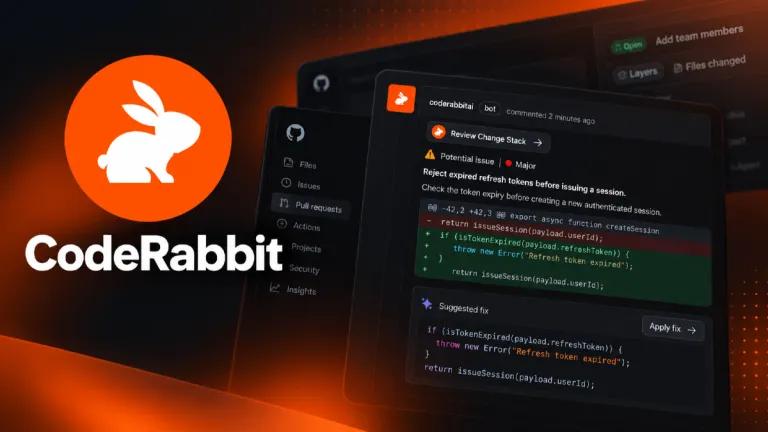
That is the problem CodeRabbit, a startup founded in 2023, is helping companies solve. Through its website, coderabbit.ai, CodeRabbit provides an AI-powered service that automatically examines programming code, identifies possible mistakes, and suggests improvements before those changes become part of a finished website, application, or other software product.
The idea has developed into an extraordinarily successful business. In August 2026, CodeRabbit raised $143 million in new funding at a valuation of $1.5 billion, becoming one of the latest startups to reach unicorn status. The company reported having more than 17,000 customers and processing over two million code reviews every week, with major companies such as NVIDIA, BMW, Trivago, Adyen, and Indeed among its customers.
What makes CodeRabbit particularly interesting is that it does not compete directly with the AI tools people use to create software. Instead, it focuses on something equally important: making sure that the software being produced is reliable, secure, and ready to use.
The Founders Who Saw the Problem Coming
CodeRabbit was founded by Harjot Gill and Guritfaq Singh, two experienced technology professionals who understood the challenges involved in building and maintaining complicated software systems.
Gill had already established himself as an entrepreneur before launching CodeRabbit. He previously co-founded Netsil, a company developing technology that helped businesses monitor the performance of their software applications. Netsil was acquired by Nutanix in 2018, after which Gill continued working in senior technology roles. He later became involved in another startup, FluxNinja, which developed tools for managing and protecting software applications.
It was during his time at FluxNinja that Gill noticed an important change taking place. Developers were beginning to use AI programming assistants such as GitHub Copilot, which allowed them to write software much faster. Although this made individual programmers more productive, it did not necessarily make the entire development process faster.
Before new software changes can be released, they normally need to be checked by another developer. This process, called code review, helps identify mistakes, security problems, and other issues that might cause the software to malfunction. Gill realized that while AI was helping developers produce more code, the amount of work involved in reviewing that code was increasing.
Singh brought additional engineering experience from Alegeus, a company providing technology for healthcare payments and benefits administration. Together, the founders recognized an opportunity to use artificial intelligence to improve the review process itself.
They established CodeRabbit in 2023, focusing on a relatively straightforward idea: if artificial intelligence could help programmers write code, it should also be able to help them check it.
The timing proved important. As AI programming tools became increasingly popular, the need to examine and verify their output grew alongside them. CodeRabbit was entering a market that was expanding rapidly, not because software development was becoming more difficult, but because creating new software was becoming so much easier.
What CodeRabbit Does and How the Product Actually Works
Understanding CodeRabbit does not require knowing how to program. Its purpose becomes much clearer when compared with an ordinary situation.
Imagine someone writing an important document. Before publishing it, they might ask another person to read through it, identify mistakes, check that everything makes sense, and suggest improvements. CodeRabbit performs a similar function, except instead of reviewing written documents, it reviews the programming instructions used to build websites, apps, and other software.
Consider a company operating an online store. Its developers regularly make changes to the website, such as adding payment methods, improving the checkout process, or introducing discounts. Every change involves modifying the software that controls how the website behaves.
Before these changes are made available to customers, they need to be checked. A small mistake could cause a discount to be calculated incorrectly, prevent customers from completing purchases, or accidentally expose information that should remain private.
Traditionally, another programmer would examine the changes manually, searching for possible mistakes. This could take considerable time, especially when a company has many developers working on different parts of its software.
CodeRabbit makes this process faster by automatically reviewing the changes.
A development team begins by connecting its software project to CodeRabbit using a supported platform such as GitHub or GitLab. These platforms are commonly used by programmers to store their work and collaborate with colleagues. Once the connection is established, CodeRabbit can examine new changes whenever developers submit them for review.
The AI analyzes the changes, looks for potential problems, and provides feedback directly within the tools the developers already use. It can identify possible programming mistakes, security weaknesses, inefficient code, and situations where a change might interfere with another part of the application.
For example, imagine that a programmer adds a promotional discount feature to an online store. The feature appears to work correctly, but an overlooked mistake could allow a customer to apply the same discount repeatedly.
When the programmer submits the changes, CodeRabbit may identify the potential problem and explain why it could occur. It can also suggest how the programming code might be improved, allowing the developer to correct the issue before customers experience it.
Another useful feature is that developers can ask CodeRabbit questions about its recommendations. Rather than simply presenting a warning, the platform can explain the reasoning behind a suggested change and help the programmer understand what needs attention.
CodeRabbit also considers the surrounding software rather than examining every change completely in isolation. This matters because a modification to one part of an application can sometimes affect another part unexpectedly. A change to how customers log in, for example, might also influence how their accounts, payments, or personal information are handled.
The platform can be used directly within supported programming editors as well, allowing developers to receive feedback while they are still working. This means potential problems can sometimes be identified before a change is formally submitted for review.
Importantly, CodeRabbit does not remove the need for human programmers. Developers still decide which suggestions to accept and whether their software is ready to release. The platform is designed to assist them by performing much of the repetitive checking that would otherwise consume valuable working hours.
For companies employing dozens or hundreds of developers, reducing the time spent on reviews can make a meaningful difference. Software improvements can be completed more efficiently, while engineers have more time to concentrate on developing new features and solving complicated problems.
How CodeRabbit Became a $1.5 Billion Startup
CodeRabbit's commercial growth has been impressive, particularly considering that the company was founded only in 2023.
Its first major publicly announced investment arrived in August 2024, when CodeRabbit raised $16 million in a Series A funding round led by venture capital firm CRV. The investment helped the young company improve its technology and expand its reach among professional software developers.
By September 2025, interest in the startup had increased substantially. CodeRabbit announced another $60 million in funding, this time led by Scale Venture Partners, with participation from NVentures, the investment arm of NVIDIA. The round valued CodeRabbit at approximately $550 million.
Less than a year later, the company reached an even more significant milestone.
In August 2026, CodeRabbit raised $143 million in a Series C financing round led by Atomico and Smash Capital. Investors participating in the round included BMW i Ventures, Datadog, and several other investment firms. The financing placed a $1.5 billion valuation on the company, almost three times its valuation from the previous year.
The investment was accompanied by substantial business growth. CodeRabbit reported serving more than 17,000 customers and processing over two million code reviews every week. According to reporting from Axios, the company had also increased its revenue approximately fivefold compared with the previous year.
Among its customers are internationally recognized businesses such as NVIDIA, BMW, Trivago, Adyen, and Indeed. These companies operate software products used by large numbers of people, making the quality and reliability of their technology particularly important.
CodeRabbit generates revenue primarily through subscriptions. Businesses pay to give their developers access to automated reviews and additional tools, with different plans available depending on the features and level of support required.
This business model is particularly interesting because demand for the product can grow alongside the amount of software a company produces. As organizations adopt AI programming assistants and generate more code, the need for efficient reviews can increase as well.
The company has also made its technology available free of charge to eligible open-source software projects. These are projects where programming code is publicly available, allowing developers around the world to collaborate on improvements. Supporting these communities helps CodeRabbit reach more programmers while contributing to software that many other businesses depend upon.
Another advantage is that CodeRabbit works within tools programmers already know. Rather than convincing companies to replace their entire development process, the startup offers an additional service that can be integrated into existing workflows. This makes it easier for teams to experiment with the product and gradually expand their use of it.
Expanding Beyond Code Reviews
Although CodeRabbit originally focused on checking programming code, the company has been expanding into other areas of software development.
One reason is the rapid improvement of AI coding agents. These are tools that can take instructions from a person and independently carry out programming tasks, such as adding a feature or fixing a problem. As they become more capable, companies may be able to produce larger amounts of software with fewer manual steps.
However, this also makes it more difficult to keep track of everything being changed.
Imagine a company using several AI tools to develop its website. One tool creates a new payment feature, another modifies the customer account system, and a third improves the checkout process. Even if each change appears to work individually, the combined modifications could create unexpected problems.
CodeRabbit wants to help companies manage these situations.
In August 2026, it introduced a broader approach called Agentic Change Management, designed to help development teams understand, review, and organize changes created by both human programmers and AI systems.
The company has developed tools that help teams decide which changes require the most attention, understand how different modifications relate to one another, and organize the work involved in developing software. It has also introduced integrations with workplace communication and project management tools, allowing engineers to obtain information about their projects without searching through numerous files and conversations.
Security is another increasingly important part of CodeRabbit's business.
On October 26, 2026, the company announced a $1 million initiative offering eligible organizations free access to advanced security scanning. Its technology is designed to examine software for weaknesses that could potentially be exploited by attackers, helping developers identify and correct problems before they cause damage.
According to CodeRabbit, its security technology had identified more than 8,000 serious vulnerabilities across approximately 600 organizations during the preceding 30 days. These are figures reported by the company, but they illustrate the types of problems its newer products are intended to address.
This expansion places CodeRabbit in competition with other technology companies offering AI-assisted software reviews and security tools, including Qodo, Greptile, and Graphite. Established platforms such as GitHub are also adding more artificial intelligence features to their services.
CodeRabbit's strategy is to offer reviews that understand the wider context of a software project, rather than simply examining individual changes. Its ability to work with existing development tools and adapt to the preferences of different engineering teams is intended to help distinguish its platform from competing products.
The company is also pursuing international growth, with plans to expand its presence in Europe, Japan, and other Asian markets. These ambitions reflect the global nature of software development and the fact that companies around the world are facing similar challenges as AI-assisted programming becomes more common.
Why CodeRabbit Could Become Even More Important
For many years, one of the biggest challenges in software development was the time and expertise required to write programming code. Artificial intelligence is fundamentally changing that situation, making it possible to produce increasingly sophisticated software much faster.
But creating software and creating reliable software are not the same thing.
A website that looks impressive can still contain errors that prevent customers from completing purchases. An application developed in a matter of hours can still have security weaknesses. And a feature generated by an advanced AI system can still interfere with other parts of a larger software product.
These problems explain why CodeRabbit's original idea has become so relevant. As the amount of software being created increases, the need to understand and verify that software becomes more important.
The company is not attempting to replace programmers or compete with every AI tool used to create applications. Instead, it is building technology intended to help developers and businesses maintain quality as the development process becomes increasingly automated.
Its progress from a startup founded in 2023 to a business valued at $1.5 billion demonstrates how quickly a focused solution can become commercially valuable when it addresses a problem affecting an entire industry.
The next stage of CodeRabbit's development will involve extending that original idea into a broader platform for reviewing, managing, and securing software. If artificial intelligence continues to make programming faster and more accessible, companies may increasingly depend on tools that help them understand what has been created and whether it can be trusted.
CodeRabbit is worth spotting because it recognized early that the future of software development would not simply be about writing more code, but about making sure that code works.