
Coursiv Is Turning AI Learning Into a Daily Habit
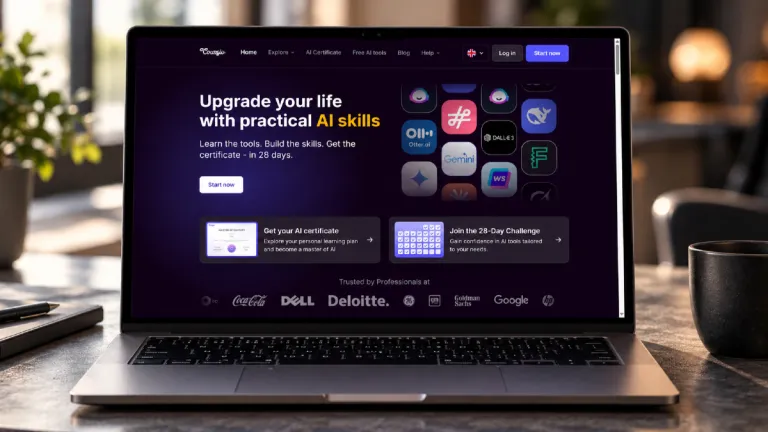
Learning how to use artificial intelligence has created an unusual problem. The tools are becoming easier to access, but the number of things people are told they need to learn keeps growing. ChatGPT, Claude, Gemini, Midjourney and other AI products are changing quickly enough that someone who wants to keep up can easily end up with dozens of tutorials, saved videos and unfinished courses.
Coursiv is taking a different approach. Instead of treating AI education as something that requires hours of lectures or a traditional online course, the platform breaks it into short lessons, practical exercises and daily challenges designed to fit into a regular routine.
The idea is closer to building a habit than going back to school.
Coursiv has grown around that simple proposition. The company says it now has more than 800,000 paid users worldwide, while its expansion from the web into mobile apps has created another significant source of growth. Independent app-market estimates suggest its mobile business generated around $1.8 million in lifetime app-store revenue within roughly its first year.
Behind those numbers is a broader question that makes Coursiv particularly interesting: as AI becomes a normal part of everyday work, could learning how to use it become something people practice a little at a time rather than study once and consider finished?
Making AI Less Intimidating
Coursiv is aimed primarily at people who know AI is becoming important but do not necessarily know where to begin.
That is a very different audience from developers or experienced AI users. Someone encountering ChatGPT for the first time may not need an explanation of how large language models work. They are more likely to want to know what they can actually do with the tool, how to write a useful prompt and where AI might save them time in their work or everyday life.
Coursiv organizes its learning around those practical questions.
Its lessons cover popular tools including ChatGPT, Claude, Gemini and Midjourney, along with broader subjects such as AI-assisted writing, productivity, marketing and other ways of applying artificial intelligence. Instead of presenting these subjects as long courses that need to be completed in large sessions, Coursiv divides them into smaller pieces.
Users can follow guided learning paths, complete short lessons and participate in challenges intended to encourage regular practice. The platform also includes exercises where learners can apply what they have just studied rather than simply reading about it.
That structure matters because one of the biggest obstacles facing online education has little to do with access to information. There is already an enormous amount of free information about AI online. The harder problem is turning that information into something people actually finish and use.
Coursiv is effectively competing against unfinished YouTube playlists, bookmarked tutorials and online courses purchased with good intentions and abandoned halfway through.
Its answer is to reduce the commitment required each time someone opens the product.
A lesson that takes a few minutes feels easier to start than a one-hour video. A daily challenge gives users a specific next step rather than asking them to decide what they should learn. Progress indicators and learning streaks add another reason to return.
Coursiv describes this approach as a “Daily AI Gym.” The comparison explains the product surprisingly well. The goal is not to master everything about artificial intelligence in a weekend. It is to keep exercising the skill.
From a Web Product to a Growing Mobile Business
Coursiv's history stretches back further than its recent visibility in mobile app stores might suggest.
The company describes itself as having been founded in 2022, while public product listings place Coursiv's early availability around 2023. Trademark records also show the Coursiv name being registered during that period. The current operating company, Coursiv Limited, was incorporated in Cyprus in 2024.
That timeline is important because Coursiv should not be mistaken for an app that suddenly appeared in 2025. It had already been developing its web-based learning business before making a significant push onto mobile devices.
The mobile expansion nevertheless appears to have changed the scale of the opportunity.
Independent app-market analysis places Coursiv's native app launch around April 2025. Within roughly its first year, estimates suggest the app had generated around $1.8 million in lifetime app-store revenue, with monthly revenue at one stage exceeding $250,000.
Those figures are estimates rather than numbers published in Coursiv's financial accounts, but they provide outside evidence that the mobile product found a meaningful paying audience.
Coursiv's growth strategy is also notable because the customer journey does not always begin inside an app store. The company has used online advertising and web-based onboarding to introduce potential users to the product before moving some of them toward the broader Coursiv experience.
That gives the business more control over how it explains the product than it would have if discovery depended entirely on someone searching an app store for an AI course.
The transition to mobile also fits naturally with the product itself.
If Coursiv wants people to spend a short amount of time learning every day, a phone is an obvious place for that behavior to happen. A traditional online course may be something a person deliberately opens on a laptop for a longer study session. A five- or ten-minute AI lesson can happen on a commute, during a break or whenever someone has a few minutes available.
In that sense, mobile is more than another distribution channel for Coursiv. It supports the behavior the company is trying to create.
The Numbers Suggest People Are Coming Back
Coursiv's reported scale is now considerably larger than that of a small experimental education app.
The company says more than 800,000 people have become paid users. It has also reported that over a one-year period, more than 1.57 million learners completed approximately 25.4 million lessons and accumulated more than two million hours of learning.
Coursiv says nearly 600,000 certificates were earned during that period.
Those figures come from the company and should be viewed as reported numbers rather than independently audited statistics. But other indicators make it clear that Coursiv has moved beyond the stage where its traction depends entirely on internal claims.
The website attracts millions of visits, the mobile application is producing measurable revenue according to outside app-market estimates, and Coursiv has accumulated a very large volume of public customer reviews.
Taken together, those signals tell a more useful story than any single headline user number.
They suggest that Coursiv has found demand among people who want AI education but may not identify themselves as technical users.
That distinction could become increasingly valuable.
Many of the people now encountering AI at work are not trying to become AI specialists. They may work in sales, administration, marketing, customer service or run a small business. What they need is enough understanding to use new tools effectively without spending weeks studying the technology behind them.
Coursiv is designed around that middle ground.
It is not trying to replace a computer science degree, and someone looking for advanced technical training will probably need something deeper. Instead, the product focuses on making practical AI skills approachable for people who might otherwise find the subject overwhelming.
That positioning also helps explain why short lessons make sense. The typical Coursiv customer may not want to “study artificial intelligence” in the traditional sense at all. They simply want to become better at using it.
A Subscription Business With an Important Trade-Off
Coursiv operates primarily as a subscription service.
Users gain access to its learning content and guided programs through recurring plans, with different subscription periods available depending on where and how someone signs up. That model gives Coursiv something many traditional course businesses lack: the possibility of continuing revenue from learners rather than relying on a one-time course purchase.
But subscriptions also create a different challenge.
Coursiv has accumulated a strong overall rating on Trustpilot and a very large number of reviews, with many users praising the simple lessons and beginner-friendly presentation. At the same time, some reviewers say the content can feel too basic once someone already has experience using AI.
There have also been complaints about subscriptions and billing. Better Business Bureau records include numerous complaints involving recurring charges, renewals or customers who say they misunderstood the subscription arrangement.
Coursiv provides information about recurring billing and cancellation through its website and support documentation, and the company has responded to many customer complaints, including issuing refunds in a number of cases. Still, the volume of billing-related complaints is significant enough to matter when looking at the business as a whole.
It highlights a broader tension in subscription-based education.
Coursiv benefits when learning becomes an ongoing habit rather than a product someone purchases once. Customers, however, need to continue finding enough value in new lessons and challenges to justify keeping that subscription active.
That means the long-term test is not simply whether Coursiv can convince people to begin learning AI. It is whether the platform can remain useful after they have learned the basics.
Competing With an Internet Full of Free AI Tutorials
Coursiv operates in a market where the raw information it teaches is often available for free.
Someone can search YouTube for ChatGPT tutorials, ask an AI assistant how to write better prompts or find countless articles explaining how to use popular AI tools. Traditional learning platforms also offer more structured courses, while the companies developing AI products increasingly publish their own guides and educational material.
That makes information itself a weak competitive advantage.
Coursiv instead has to compete through structure, convenience and motivation.
The product packages the learning process into a clear path. Rather than asking someone to search for the next useful tutorial, it decides what comes next. Rather than expecting users to remember to continue an unfinished course, it encourages them to return through daily activities and progress.
There are similarities to what language-learning apps have done with subjects that once depended heavily on textbooks and classroom instruction.
The lesson is not that short exercises are automatically better than deep study. They serve a different purpose.
A person learning a new language through a mobile app may eventually need conversations, books and more advanced instruction. But the app can still be valuable because it gets that person practicing regularly.
Coursiv is applying a comparable idea to AI literacy.
The challenge is that artificial intelligence changes much faster than a language. Individual tools can gain or lose popularity in months. Interfaces change. New models arrive. Capabilities that once required careful prompting can become automatic features.
For an education company, that creates constant work. A course library about AI cannot remain static for years.
But it also creates an opportunity.
Every major change gives people something new they feel they need to understand.
Turning AI Curiosity Into a Lasting Learning Habit
The first wave of consumer interest in generative AI created an enormous appetite for basic education. Millions of people suddenly wanted to know what prompts were, what ChatGPT could do and whether AI could help them work faster.
That introductory phase will not last forever.
As these tools become familiar, knowing that AI exists will no longer be a useful skill. People will expect more specific help: how to use it in their job, how to combine different tools, how to judge the quality of an AI-generated answer and how to adapt as the technology changes.
That may determine where Coursiv goes next.
The company's habit-based format gives it a reason to evolve continuously rather than producing a fixed catalog of courses and waiting for people to complete them. New AI tools can become new lessons. Changes to existing products can create new challenges. More specialized learning paths can serve people who have moved beyond the beginner stage.
It also means Coursiv has to stay unusually close to the technology it teaches. If the learning material falls behind the tools themselves, the advantage of daily education disappears quickly.
That makes Coursiv's biggest opportunity and biggest challenge essentially the same thing: AI refuses to stand still.
For now, the company has demonstrated that a substantial audience is willing to pay for someone to organize the confusing world of AI into smaller, manageable steps. If Coursiv can keep those steps moving forward as its learners become more capable, the Daily AI Gym may prove more durable than the individual AI tools inside it.