
Courtyard.io Is Turning Trading Cards Into a $50 Million-a-Month Marketplace
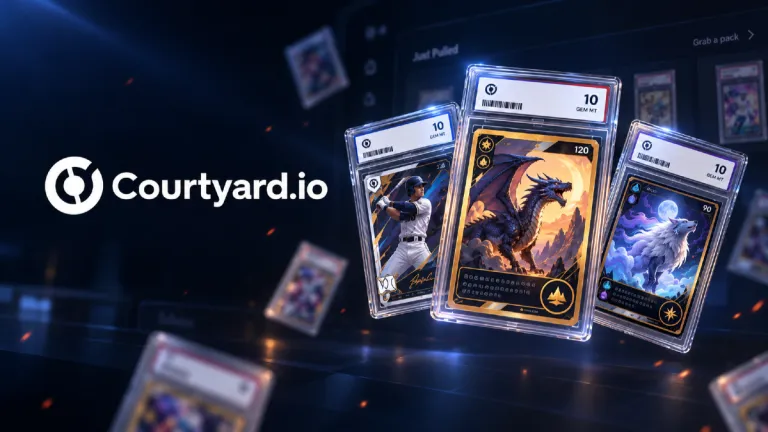
Buying and selling collectible trading cards has traditionally involved finding a buyer, negotiating a price, packaging the item, and arranging shipping. But what if collectors could buy and sell physical collectibles instantly, without ever having to handle them?
That's the idea behind Courtyard.io, a New York-based startup that combines physical collectibles with a digital marketplace, allowing users to discover, purchase, trade, and sell valuable items online.
Founded in 2021, Courtyard has experienced remarkable growth. According to the company, its monthly gross merchandise volume increased from approximately $50,000 in January 2024 to $50 million in July 2025, representing a staggering 1,000-fold increase in just 18 months.
With $37 million in announced funding, backing from major venture capital firms, and an expanding collection of products ranging from Pokémon cards to luxury watches, Courtyard is positioning itself as something much bigger than another online trading card marketplace.
From Blockchain Experiment to Collectibles Marketplace
Courtyard was founded in 2021 by Nicolas le Jeune and Paulin Andurand, two entrepreneurs with experience at some of the world's largest technology companies.
Le Jeune, who serves as CEO, previously spent more than eight years working in sales and partnerships at Google and YouTube. Andurand, Courtyard's chief technology officer, spent approximately eight years as a software engineer at Apple.
The company joined Y Combinator's Winter 2022 accelerator program and initially focused on bringing physical collectibles onto the blockchain.
Its original concept was relatively straightforward. Valuable physical items could be stored securely in a vault, while digital tokens representing ownership of those items could be bought and sold online.
In March 2022, Courtyard introduced an early collection of approximately 800 authenticated Pokémon cards. Each physical card was stored securely, while a corresponding non-fungible token, commonly known as an NFT, allowed ownership to be transferred digitally.
The initial release sold out within hours, demonstrating early interest in a marketplace where people could trade physical collectibles without repeatedly shipping them between owners.
In November 2022, Courtyard announced a $7 million seed funding round led by New Enterprise Associates, with participation from Y Combinator, OpenSea Ventures, VaynerFund, Brink's, and Cherry Ventures.
However, Courtyard's evolution would eventually take the company beyond its original blockchain-focused identity.
In August 2023, it introduced a marketplace designed to make digital ownership of physical collectibles accessible to a broader audience, including people with no experience using cryptocurrencies.
Customers could use familiar payment methods, such as credit and debit cards, while the underlying blockchain technology handled ownership records in the background.
This shift helped transform Courtyard from a specialized technology platform into a consumer marketplace built around the collecting experience itself.
How Courtyard Makes Collecting Different
The central feature of Courtyard is its ability to separate physical possession from ownership.
When someone purchases a collectible through the platform, the actual item can remain inside a secure storage facility. Courtyard maintains a digital record of ownership, allowing the collectible to be transferred to another buyer without moving the physical object.
For example, someone might purchase a rare Pokémon card and keep it stored in Courtyard's vault. A week later, that collector could sell it to another user, who becomes the new owner without either person handling or shipping the card.
The new owner could then keep the card, sell it again, or request delivery of the physical item.
Courtyard says its vaulted collectibles are authenticated and insured, reducing some of the risks associated with storing and repeatedly transporting valuable objects.
The model also addresses one of the longstanding inconveniences of collecting: the time and expense involved in completing transactions.
On traditional marketplaces such as eBay, a seller normally needs to prepare a listing, wait for a buyer, package the item, arrange shipping, and potentially deal with disputes or returns.
Courtyard removes several of those steps when both parties choose to keep the collectible in storage.
Another important part of the platform is its marketplace fee structure.
Courtyard advertises 0% marketplace fees, allowing users to list and sell collectibles without the seller commissions commonly associated with other online marketplaces. Other costs, such as shipping or payment-related charges, may still apply depending on the transaction.
But Courtyard's most distinctive feature is not simply the ability to trade physical collectibles digitally.
It is the way the company has turned buying collectibles into a form of interactive entertainment.
Turning Mystery Packs Into a Digital Shopping Experience
One of Courtyard's most recognizable products is its digital mystery packs.
Instead of choosing a specific trading card from a marketplace listing, customers can purchase a pack at a fixed price and immediately discover which physical collectible they have received.
The experience resembles opening a traditional pack of Pokémon or sports cards, except everything happens digitally.
A customer purchasing a $50 pack, for example, might receive a collectible worth less than the purchase price or something considerably more valuable.
The actual item already exists in Courtyard's inventory, and the digital reveal determines which collectible is assigned to the customer.
Courtyard publishes probability information for its packs, allowing customers to examine the possible value ranges and their associated odds before purchasing.
Once a collectible has been revealed, the customer has several options.
They can keep it in their digital collection, arrange delivery of the physical item, list it for sale on Courtyard's marketplace, or accept an immediate buyback offer.
Historically, Courtyard has advertised instant buybacks at approximately 90% of an item's assessed fair market value, although the precise percentage and terms can differ by product and promotion.
Importantly, the buyback amount is calculated from the collectible's estimated value, not necessarily the amount paid for the mystery pack.
That means a customer who purchases a $50 pack is not guaranteed to receive $45 back. If the revealed collectible has a lower market value, the buyback offer may also be significantly lower.
This is an important distinction because buying randomized collectibles involves financial risk, even when the underlying items are genuine and authenticated.
For Courtyard, however, the combination of digital reveals, physical ownership, instant resale options, and a continuously available marketplace creates a shopping experience that is very different from conventional online retail.
Customers are not simply browsing products and completing purchases. They are participating in an experience built around discovery, surprise, and the possibility of finding something rare.
It is a model that combines elements of collecting, gaming, and e-commerce into a single platform.
From $50,000 to $50 Million in Monthly Trading Volume
Courtyard's growth has been one of the most remarkable aspects of its development.
According to figures disclosed by the company in July 2025, monthly gross merchandise volume increased from approximately $50,000 in January 2024 to $50 million by July 2025.
<text preserveWhitespace={true}>That represents an increase of approximately 100,000%, or 1,000 times the original monthly volume.</text>
Gross merchandise volume, often abbreviated as GMV, measures the total value of transactions processed through a marketplace. It is not the same as company revenue or profit.
This distinction is especially important for Courtyard because collectibles can change ownership multiple times while remaining inside the company's storage facilities.
A single trading card might be purchased, resold, and purchased again without physically moving anywhere.
During its 2025 funding announcement, Y Combinator highlighted Courtyard's unusually high transaction activity, noting that some collectibles were being resold as many as eight times.
The ability to generate repeated transactions from the same inventory is a significant characteristic of the business.
Traditional collectibles marketplaces generally depend on sellers continually listing products and shipping them to buyers. Courtyard's stored inventory can remain available for digital trading after an initial purchase, creating opportunities for repeated transactions without repeated shipping costs.
The company's rapid growth also attracted major investors.
On July 24, 2025, Courtyard announced a $30 million Series A funding round led by Forerunner Ventures, with participation from New Enterprise Associates, Y Combinator, Burst Capital, Prelude Ventures, ParaFi Capital, and other investors.
Combined with its previously announced $7 million seed round, this brought its publicly announced funding from those two rounds to $37 million.
The investment provided additional capital for hiring, developing its marketplace, expanding into new collectible categories, and supporting its mobile application.
Courtyard's reported $50 million monthly GMV milestone remains an important indicator of the scale it had achieved by mid-2025. It should not, however, be interpreted as confirmed monthly revenue or as a verified trading volume for every subsequent month.
Even with that distinction, the scale of the increase helps explain why investors have become interested in the company's approach to collectibles.
Expanding Beyond Pokémon and Sports Cards
Although trading cards helped establish Courtyard's business, the company has increasingly demonstrated that its model can extend into other types of collectibles.
Pokémon cards remain an important category, alongside basketball, baseball, football, hockey, soccer, and other trading cards.
However, Courtyard has also expanded into collectible comic books, luxury watches, and rare coins.
In February 2026, the company introduced watches as a new product category, offering customers the opportunity to purchase authenticated luxury timepieces through its digital pack system.
Some of these products involve significantly higher purchase prices than traditional trading cards, with selected watch packs priced at $10,000.
The underlying concept remains familiar: customers purchase a product with disclosed probabilities, discover the specific item assigned to them, and can then store, resell, or request delivery of the physical collectible.
In June 2026, Courtyard expanded further by introducing rare coins.
Its coin packs launched at $150, $500, and $1,500 price points, featuring authenticated collectible coins ranging from historic American silver dollars to valuable gold pieces.
This expansion is particularly interesting because rare coins represent a very different collecting audience from Pokémon or sports cards.
Traditional coin collecting frequently involves specialist dealers, auctions, exhibitions, and experienced buyers who understand differences in grading, rarity, and historical significance.
Courtyard's approach attempts to make that market accessible through the same digital experience that helped popularize its trading card business.
The company also introduced direct trading between users in May 2026, giving collectors another way to exchange items through the platform.
These developments suggest that Courtyard is moving toward a broader marketplace where many types of authenticated physical assets can be discovered, stored, and traded.
The opportunity potentially extends well beyond individual collectible categories.
If customers become comfortable purchasing and owning valuable physical items without immediately taking delivery, the same underlying marketplace model could support a much wider range of products.
That broader opportunity helps explain why Courtyard has continued expanding its inventory rather than remaining focused exclusively on trading cards.
A Business Model Built Around Repeat Transactions
Courtyard's business model is unusual because the company advertises zero marketplace fees while still operating a platform that requires inventory sourcing, authentication, storage, insurance, payment processing, and technology infrastructure.
Unlike a conventional marketplace that primarily connects independent buyers and sellers, Courtyard also participates directly in the buying and selling of certain collectibles.
Its mystery-pack products are an important part of that approach.
Customers pay a fixed amount to receive a randomly allocated collectible from a defined inventory pool. The value of that item may differ from the purchase price, and Courtyard can offer to purchase it back at a discount to its assessed market value.
These transactions create potential revenue opportunities separate from traditional marketplace commissions.
The company can also benefit from efficiencies created by keeping physical inventory in centralized storage.
When collectibles remain in the vault, a completed sale does not necessarily require new packaging, shipping, or handling.
That creates an important operational advantage as transaction frequency increases.
However, the business is not without challenges.
Courtyard depends on maintaining trust in the authenticity of its collectibles, the accuracy of its market valuations, and the reliability of its storage and delivery arrangements.
Its mystery-pack model also creates questions about how consumers understand the financial risks involved in randomized purchases.
Although customers receive actual collectibles rather than simply placing wagers on an outcome, the combination of paid random reveals and potentially high-value prizes shares certain characteristics with chance-based entertainment.
As Courtyard expands into more expensive products and additional markets, consumer protection and regulatory considerations could become increasingly important.
The company must also manage fluctuations in collectible prices.
A rare trading card or luxury watch can change in value as demand, popularity, and market conditions shift. Buyback offers based on estimated market values are therefore not equivalent to guaranteed returns on the original purchase price.
Despite these challenges, Courtyard has identified an interesting commercial opportunity.
Rather than earning a commission every time ownership changes hands, its model brings together product discovery, initial sales, optional buybacks, storage, and secondary trading.
That structure allows the company to benefit from the broader collecting experience, not just the final transaction between two individuals.
Its long-term success will depend on whether it can maintain healthy economics while continuing to offer competitive prices, reliable service, and a trustworthy marketplace.
Why Courtyard Could Change How People Buy Collectibles
The most interesting thing about Courtyard may not be its trading cards, mystery packs, or even its extraordinary growth figures.
It is the company's attempt to change what ownership of a physical collectible actually looks like.
For decades, buying a collectible generally meant taking possession of it, finding somewhere to store it, and arranging physical delivery whenever it changed owners.
Courtyard offers an alternative in which the item remains safely stored while ownership can move between buyers almost instantly.
That changes how frequently collectibles can be traded and makes it possible for the same physical inventory to support a much more active marketplace.
The company has also demonstrated that complicated technology does not necessarily need to be visible to consumers.
Courtyard began with blockchain-based ownership and NFTs, but its subsequent development has focused on making the experience feel more like ordinary online shopping.
Customers can browse products, pay using familiar methods, and manage their collections without needing to understand the technical systems recording ownership.
This approach may ultimately be more important than the underlying technology itself.
Courtyard's growth from $50,000 to $50 million in reported monthly gross merchandise volume during an 18-month period shows how quickly an alternative marketplace model can gain momentum when it attracts an enthusiastic audience.
Its expansion into watches, coins, and other collectibles suggests that the company sees opportunities far beyond the markets that originally made it popular.
Of course, rapid trading activity does not automatically translate into long-term profitability, and the company will need to demonstrate that its approach remains sustainable as it expands.
But if Courtyard can continue building trust, attracting collectors, and extending its marketplace into new categories, it could help establish a different way of buying and selling valuable physical goods.
What began as an experiment in connecting physical collectibles with digital ownership has become a rapidly growing consumer business.
And that transformation may be the most significant part of the story behind Courtyard.