
CrowdVolt Is Turning Concert Ticket Resale Into a Stock Market
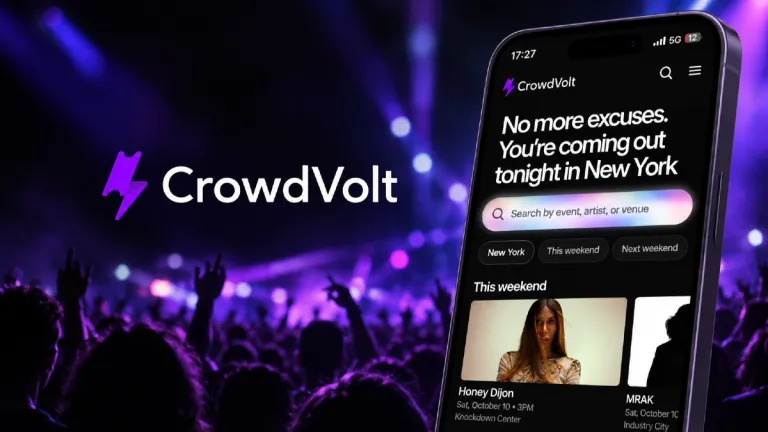
Getting tickets to a sold-out concert can be frustrating, especially when resale prices seem unpredictable and buyers have little control over what they pay. Three entrepreneurs from New York believe the experience can work differently by borrowing an idea from financial markets.
Founded in 2024, CrowdVolt is a ticket resale marketplace where buyers place bids and sellers set asking prices. Instead of simply accepting whatever price appears on a listing, fans can make offers and potentially secure tickets at prices they are willing to pay.
The concept is similar to how stocks are traded, with buyers and sellers expressing what they believe something is worth. CrowdVolt initially focused on electronic dance music events, raves, and festivals, but its ambitions have grown beyond a simple ticket exchange.
Backed by Y Combinator and $1.4 million in early funding, the startup has expanded from New York into several major American cities. Its progress shows how a relatively small company can approach an established industry with a different marketplace model.
Three Friends Who Knew the Problem Firsthand
CrowdVolt was founded by Max Hammer, Josh Karol, and Aria Mohseni, three friends who shared an enthusiasm for electronic dance music and nightlife. Their backgrounds combined finance, software engineering, consulting, and firsthand experience with the music industry.
Hammer previously worked in investment banking, while Karol had experience as a software engineer at financial and technology companies. Mohseni brought additional familiarity with the electronic music scene as a DJ who had performed at New York venues.
Together, they had attended dozens of electronic music events and experienced the complications of buying tickets, particularly when popular shows sold out. Tickets were often released months in advance, plans changed, and resale transactions could become unnecessarily complicated.
The founders recognized that people were already turning to informal online communities to exchange tickets. They saw an opportunity to provide a dedicated platform where buyers and sellers could negotiate prices and complete transactions within a structured marketplace.
Rather than attempting to serve every type of live event immediately, they concentrated on a community they knew personally. CrowdVolt launched in January 2024 with a focus on New York’s rave and electronic dance music scene, particularly events around Brooklyn.
How the Stock Market Concept Works
Traditional ticket resale websites generally revolve around listings. A seller chooses a price, and a buyer either accepts it or looks elsewhere.
CrowdVolt adds another dimension by allowing buyers to submit bids for the tickets they want.
For example, imagine that someone has a ticket to a sold-out concert and wants to sell it for $150. A prospective buyer might only be willing to pay $120, so they place a bid at that amount rather than immediately purchasing the ticket.
The seller can choose to accept an available offer, while buyers can also purchase tickets directly at an advertised asking price. When both sides agree on a price, the platform facilitates the transaction and ticket transfer.
This creates a marketplace in which buyers actively express demand instead of merely browsing listings. The approach resembles the bid-and-ask mechanics used in financial markets and marketplaces such as StockX, which applies a similar concept to sneakers and other collectible products.
The distinction is especially interesting for event tickets because their value changes as the event approaches. Demand for a popular performance may increase, while someone who can no longer attend might become more willing to accept a lower offer.
CrowdVolt’s model gives both parties a way to respond to those changing circumstances. It also brings the negotiation, payment, and transfer process into one dedicated service rather than requiring participants to coordinate everything themselves.
From New York Launch to $1.4 Million in Funding
CrowdVolt’s early progress attracted attention from Y Combinator, the startup accelerator known for supporting companies such as Airbnb, Stripe, and Dropbox. The company joined its Winter 2024 batch shortly after launching.
By July 2024, CrowdVolt had attracted more than 3,000 active users and had approximately 250 events listed on its platform. Those figures were particularly encouraging because the service was still concentrated in the New York electronic music market.
The startup also secured $1.4 million in funding, with investors including Brickyard VC, Goodwater Capital, Pioneer Fund, and YouTube co-founder Jawed Karim.
The investment provided capital to develop the product and enter additional markets. At the time, the founders identified Miami, Chicago, and cities in California as potential expansion destinations.
Unlike marketplaces that need to appeal to millions of consumers immediately, CrowdVolt could initially concentrate on establishing activity within tightly connected music communities. Electronic music fans regularly attend events, share recommendations, and participate in local nightlife networks, creating opportunities for repeat transactions and word-of-mouth growth.
Its early user base demonstrated that there was demand for an alternative ticket exchange designed around this particular audience.
Expansion Into Five Major Cities
CrowdVolt has continued operating and expanding since its initial launch, with its official website now listing five major American markets: New York, Miami, Chicago, Los Angeles, and San Francisco.
The expansion is significant because each city has its own nightlife scene, event organizers, venues, and local communities. A marketplace that works in one city does not automatically have sufficient buyers and sellers in another.
CrowdVolt has also continued developing relationships within the electronic music industry. During Miami Music Week in 2026, the company reported facilitating wristband pickups for hundreds of Ultra Music Festival attendees.
Its expansion into San Francisco was another step in reaching a wider audience of electronic music fans. The company has also promoted its presence around major music and nightlife events, placing its service close to the communities it originally set out to serve.
In August 2026, the ARC Music Festival community announced CrowdVolt as its recommended platform for secondhand ticket transactions. The arrangement provided another example of the startup connecting with established festival audiences rather than relying exclusively on conventional advertising.
CrowdVolt’s current size is difficult to establish precisely because updated total user counts, ticket sales, and revenue figures have not been publicly confirmed. However, its continuing operations, geographic expansion, and event-related collaborations demonstrate activity well beyond its initial launch.
From Ticket Website to Mobile Social Marketplace
One of CrowdVolt’s more interesting developments has been its evolution from a web-based ticket exchange into a broader mobile experience.
When the startup received national coverage in July 2024, it operated primarily through its website. By 2026, CrowdVolt had introduced an iPhone app designed around ticket transactions, nightlife discovery, and the communities surrounding live events.
The app allows users to explore events, purchase tickets, list tickets for sale, and follow venues, promoters, and artists. Rather than serving only people who already know which event they want to attend, the platform is increasingly positioning itself as a place to discover what is happening nearby.
This creates an interesting opportunity to combine ticket transactions with social discovery.
Someone might open CrowdVolt to sell a ticket they can no longer use, but discover another event happening that weekend. A person browsing performances at a favorite venue might find a show they otherwise would never have considered attending.
As of October 2026, the app had received 357 ratings on the US Apple App Store, with an average rating of 4.9 out of 5. Although app ratings are not a substitute for download or active-user statistics, they provide another visible indication of the platform’s consumer presence.
The development also reflects the company’s broader positioning. Y Combinator now describes CrowdVolt as an infrastructure company for live events, beginning with an automated marketplace for electronic dance music.
That description suggests ambitions extending beyond individual ticket transactions, although the company’s longer-term product plans have not been fully disclosed.
A Business Model With Room to Expand
CrowdVolt operates in an industry where a successful marketplace can earn revenue by facilitating transactions between buyers and sellers.
Its business model centers on ticket exchanges, with transaction fees providing a way to monetize marketplace activity. As with other two-sided marketplaces, its long-term economics depend on attracting buyers and sellers, maintaining sufficient ticket availability, and encouraging transactions to take place through the platform.
The interesting opportunity is that live entertainment is not a one-time purchasing category.
Fans attend concerts throughout the year, venues host repeated events, and festivals return season after season. A marketplace that becomes familiar within a particular music community can potentially benefit from recurring demand rather than having to acquire an entirely new audience for every transaction.
There is also an important network effect. More sellers can attract additional buyers by making tickets easier to find, while more buyers give sellers a stronger reason to list their tickets.
The company’s focus on electronic music provides a recognizable identity in a market where many established platforms attempt to serve almost every entertainment category.
CrowdVolt does not need to replace the largest ticketing companies to establish a meaningful business. Becoming a preferred exchange within specific music genres, cities, or festival communities could create a valuable position of its own.
Can CrowdVolt Change How Fans Trade Tickets?
The most compelling part of CrowdVolt is how straightforward its central idea is.
Ticket resale has existed for decades, but the company’s founders recognized that buyers could have a more active role in determining what they pay. By introducing a bid-and-ask marketplace, they created a familiar concept with a different application.
In less than three years, CrowdVolt has moved from a New York-focused startup to a service covering five major American cities, secured $1.4 million in funding, gained backing from Y Combinator, and introduced a dedicated mobile app.
The next stage will be determined by how effectively it can expand marketplace activity, deepen its connections with event communities, and translate user engagement into a sustainable business.
Whether CrowdVolt ultimately remains focused on electronic music or expands into a much broader live entertainment platform, its approach offers an interesting alternative to conventional ticket resale.
And if the company succeeds, its lasting contribution may be surprisingly simple: making concert tickets something fans can bid for rather than merely buy at someone else’s asking price.