
Logan Paul Launches Ripit After Record $16.5 Million Pokémon Card Sale
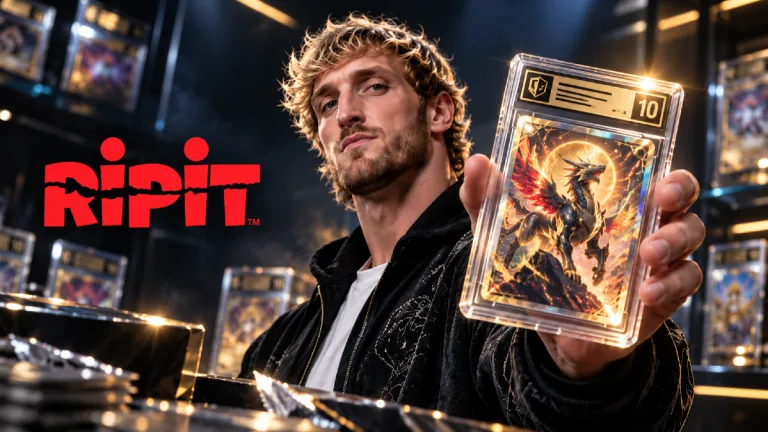
When Logan Paul sold one of the world’s rarest Pokémon cards for a record-breaking $16.49 million in February 2026, he also introduced his next business venture: Ripit. Available at ripit.co, the platform lets collectors open digital mystery packs containing real, professionally graded Pokémon and sports trading cards, which they can sell, store, or have shipped to their homes. The launch connected one of the most publicized collectible sales in history with Paul’s ambitions to build a business around the trading card industry.
A Record-Breaking Auction Became a Business Launch
On February 16, 2026, Logan Paul’s PSA 10 Pikachu Illustrator card sold through Goldin Auctions for $16,492,000, setting a Guinness World Record for the most expensive trading card sold at auction. Paul had acquired the card in 2021 in a transaction valued at $5.275 million, making the sale one of the most remarkable transactions in Pokémon collecting history.
Rather than treating the auction solely as the conclusion of his ownership of the card, Paul used the occasion to introduce Ripit to an audience already interested in rare collectibles. The timing gave the emerging company exposure during an event that attracted coverage from major news outlets, collectors, and Pokémon enthusiasts around the world.
The auction also demonstrated why Paul was particularly well positioned to enter the industry. Having spent years acquiring, displaying, and promoting valuable trading cards, he had developed a recognizable presence in a market where entertainment, collecting, and high-value transactions increasingly overlap.
The Entrepreneur Behind Ripit
Logan Paul is best known for building a large online audience through YouTube before expanding into professional wrestling, podcasting, and consumer businesses. His entrepreneurial background includes co-founding the PRIME beverage brand and Lunchly, while his involvement in the investment firm Anti Fund has further connected him to the startup ecosystem.
Ripit represents another extension of his business interests, but one closely associated with his personal enthusiasm for Pokémon cards. His experience buying and selling collectibles, combined with his ability to attract attention through social media, provides the company with advantages that many early-stage trading card businesses lack.
Paul is publicly identified as a co-founder of Ripit, although the company’s complete founding team and ownership percentages have not been disclosed in the sources reviewed. Its LinkedIn presence identifies a small private technology business, while the broader structure of the company and any outside investment remain less transparent.
Building a Trading Card Platform Behind the Scenes
Turning the Ripit concept into an operating business required more than creating a digital pack-opening experience. The company needed systems capable of connecting online transactions to physical collectibles, including card storage, payment processing, customer accounts, fulfillment, and regulatory compliance.
Adam Istvan, an operations executive who worked on the platform’s launch, has publicly described his involvement in developing Ripit’s operational infrastructure. According to his account, the work included loyalty program architecture, compliance documentation, email marketing systems, shipping logistics, platform tools, and coordination between product, design, legal, marketing, and finance teams.
This operational work is central to Ripit’s business model. Unlike a purely digital collecting game, the company must account for the physical cards associated with its digital inventory and manage what happens after a customer reveals a collectible.
Ripit was publicly introduced in February 2026 and subsequently developed its consumer-facing service, promotional campaigns, and online collecting community. The exact date of its initial incorporation and the full history of its development before the public announcement have not been established.
How Ripit Connects Digital Packs With Physical Cards
Ripit combines the excitement of opening collectible card packs with an online platform where the revealed items correspond to real graded trading cards. Users purchase digital packs, discover which collectible they receive, and then decide what to do with the card.
Instead of requiring every customer to accept a physical delivery, the platform offers several options. Collectors can leave cards in storage, sell them through the platform’s available selling mechanisms, or request shipment of the actual graded collectible.
Its inventory includes Pokémon cards alongside sports collectibles from basketball, baseball, and football. The platform also promotes exceptionally valuable cards, including a Beckett-graded CoroCoro Pokémon collectible displayed as a potential prize with an estimated value of $150,000.
The system creates a different experience from opening conventional sealed booster packs. Customers receive a digitally revealed graded collectible rather than opening physical packs themselves and then arranging professional grading, storage, or resale separately.
Early Attention and the Growth of Its Community
Ripit’s early marketing has relied heavily on Paul’s public profile, collectible giveaways, social media content, and referral-based campaigns. Its promotional waitlist offered prizes from Paul’s personal collection, including graded Pokémon cards and valuable sealed products, encouraging collectors to invite other participants.
The company’s early-access leaderboard has displayed more than 41,000 signups toward a 50,000-participant milestone. That figure represents a promotional signup total reported by Ripit, rather than independently verified paying customers, active users, or completed transactions.
Beyond its signup campaigns, Ripit has developed a social media presence focused on rare card openings, collectible discoveries, and videos featuring Paul. Third-party social media tracking has reported substantial viewing activity across the company’s short-form content, although those figures do not establish how many viewers become paying customers.
The distinction matters because public attention does not necessarily translate into sustainable commercial performance. As of October 2026, Ripit’s revenue, profitability, total transaction volume, and verified active customer numbers have not been publicly established through reliable independent reporting.
Competing in a Growing Digital Collectibles Market
Ripit enters a market where companies such as Courtyard, Arena Club, and Phygitals have already introduced ways to acquire real collectibles through digital experiences. These platforms offer different combinations of mystery packs, graded cards, storage, resale options, and physical fulfillment.
What distinguishes Ripit is not the invention of digital card opening itself, but the visibility of its co-founder and the connection to his existing collecting audience. Paul’s involvement provides opportunities for high-profile card reveals, collaborations, and promotional events that can attract attention beyond the traditional trading card community.
However, the market also presents challenges. Mystery packs involve uncertain outcomes, and collectors must consider the price paid, the value of the card received, the platform’s valuation methods, and any applicable costs associated with selling or shipping a collectible.
Trust is therefore an important part of the business. Clear information about available cards, pack probabilities, custody arrangements, and redemption procedures can influence whether customers continue using a platform after the initial excitement of opening their first packs.
Ripit currently restricts participation to adult residents of the United States, limiting its immediate international reach. The company provides a way for visitors outside the country to express interest in potential future expansion, but no confirmed international launch schedule has been established.
From a Famous Pokémon Card to a Collectibles Business
Ripit’s introduction during the sale of Paul’s Pikachu Illustrator card gave the company an unusual beginning. A single collectible that had already become famous for its rarity and price helped introduce a platform designed to make discovering graded cards a digital experience.
The business now operates at the intersection of collecting, entertainment, and online commerce. Its longer-term potential will depend less on the publicity surrounding its launch and more on its ability to maintain customer trust, attract repeat purchases, manage physical inventory, and compete with established digital collectibles platforms.
For Paul, Ripit marks another attempt to translate a large audience and recognizable personal interests into a standalone consumer business. Whether the company can develop substantial independent traction remains an open question, but its origins already make it one of the more recognizable new entrants in the digital trading card market.