
Pamba Generates Over 500 Million Views With AI Social Media Creators
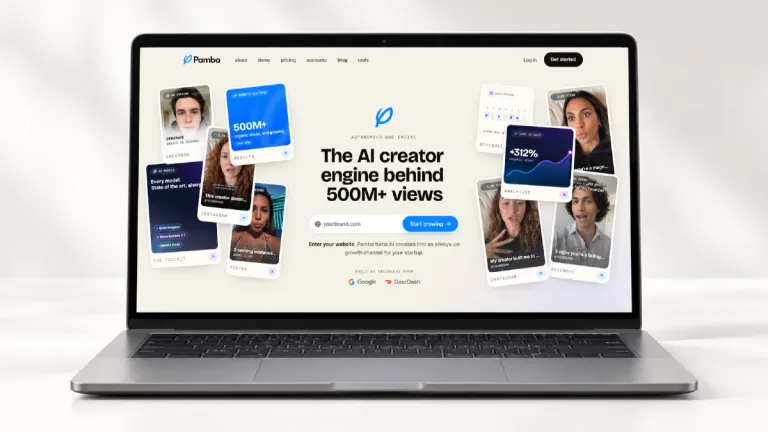
Creating social media videos has become an important way for startups to attract customers, but producing enough content to reach a large audience takes time, money, and constant experimentation. Pamba, a San Francisco-based startup, wants to make that process significantly easier by replacing traditional content production with AI-generated social media creators that can produce and publish videos automatically.
The company has developed a platform that creates virtual personalities, researches trending topics, writes scripts, generates videos, and publishes them to TikTok and Instagram. Instead of hiring influencers or recording videos themselves, businesses can create digital presenters that promote their products through dedicated social media accounts.
Pamba reports that its AI creator operations have generated more than 500 million organic video views across over 110 accounts. Although these figures are company-reported and do not represent the number of customers using its software, they suggest substantial experience with the type of content the platform is designed to produce.
What makes Pamba particularly interesting is that it goes beyond generating videos. The startup also operates physical smartphones that publish content directly to social media, combining artificial intelligence, automated content production, and account management into a single service.
From Running Social Media Accounts to Building Pamba
Pamba began development in June 2025, several months before its founders started operating their own AI-generated social media accounts. The startup is led by cofounder and CEO Eric Owusu Sekyere and cofounder and CTO Karol Zdebel, alongside founding systems analyst Victor Batirow.
Based in San Francisco, the three-person team combines software development with hands-on experience in automated content creation. Pamba also highlights engineering backgrounds that include Google and DoorDash.
The company traces an important part of its development to November 2025, when it began operating what it describes as a six-figure AI user-generated content agency. The term user-generated content, often shortened to UGC, generally refers to videos and other material that resemble content produced by ordinary social media users rather than traditional advertisements.
For brands, this style of marketing can be appealing because it fits naturally into platforms where people are accustomed to watching personal recommendations, product demonstrations, and short videos made by individual creators.
However, producing such content consistently creates operational challenges. Businesses need to find ideas, write scripts, arrange filming, edit videos, manage accounts, and monitor which posts attract attention. Even when individual videos are inexpensive, coordinating the entire process can become demanding.
Pamba's founders approached the problem by building and operating their own AI-powered creator accounts. This allowed them to experiment with different personalities, video formats, and publishing strategies while developing the technology needed to automate the work.
Rather than relying exclusively on assumptions about what might perform well, the team could study results from accounts it was actually running.
By July 2026, Pamba had published an analysis of 414 million views generated through its creator operations. Two months later, in September 2026, it publicly launched its software platform, turning the technology and experience developed through its earlier operations into a product that other businesses could use.
That progression distinguishes Pamba from a startup launching a content-generation tool before testing its underlying approach. Its commercial software is relatively new, but the company had already spent months experimenting with AI creators and social media distribution.
How Pamba Creates and Publishes Videos
Pamba is designed to handle much of the work involved in running a social media content operation.
A business can begin by entering its website address, giving the system information about its product and the audience it wants to reach. Pamba then uses artificial intelligence to research relevant topics, examine content trends, and develop ideas for videos.
Users can create their own AI presenters, known as avatars, or choose an existing character. These digital personalities can appear in multiple videos, allowing a business to maintain a recognizable presenter without employing a human actor.
For example, a startup selling a fitness application could create an AI presenter who regularly shares exercise advice, discusses common fitness mistakes, or introduces features of the app. The business would not need to film the presenter, hire a production crew, or record every script.
Once an idea has been selected, Pamba can write the script, generate the footage, assemble the video, and prepare it for publication. Users can also provide their own scripts or reference material when they want more control over the finished content.
The platform supports different content formats, including videos featuring AI presenters and slideshow-style posts. Businesses can reuse characters, change scenes, edit footage, and produce multiple variations of an idea.
Importantly, Pamba does not require users to surrender editorial control completely. Its documented workflow includes a review and approval stage before videos are published. Customers can examine the finished content, request changes, or reject material that does not meet their expectations.
This approval process is particularly relevant for businesses concerned about accuracy, brand reputation, or inappropriate AI-generated material.
After approval, Pamba schedules the content for publication and handles the actual posting. Its system can then collect performance information, including views and engagement, to help identify which videos deserve further experimentation.
The result is a repeating process in which businesses can move from an initial product description to an ongoing stream of social media content without manually managing every production step.
Why Pamba Uses Real iPhones Instead of Conventional Automation
One of Pamba's more unusual decisions is to use physical smartphones for publishing.
Many social media management platforms rely on official connections provided by TikTok, Instagram, and other services. These connections allow external software to perform approved actions, such as scheduling posts or retrieving account information.
Pamba has chosen a different approach for its managed accounts.
The company operates physical iPhones equipped with US carrier SIM cards. When content is ready to publish, the system uses a real device to open the relevant social media application and complete the posting process.
According to Pamba, this approach is intended to make automated account operations resemble activity performed directly through an ordinary smartphone rather than through browser-based software or simulated devices.
Its managed account service also includes account setup, scheduled publishing, performance monitoring, and what the company calls account warming.
Account warming involves using a relatively new social media account to browse and interact with relevant content before establishing a regular publishing routine. Pamba offers automated browsing sessions intended to help new accounts develop activity histories within their chosen subjects.
The physical-device approach introduces operational requirements that ordinary cloud-based content generators do not face. Smartphones need to remain connected, available, and functioning, while individual devices have limited capacity to perform simultaneous tasks.
Pamba's documentation acknowledges these limitations. Publishing occupies device time, and scheduled posts sometimes need to be moved when a smartphone is already busy performing another operation.
The company also offers customers the ability to connect some existing TikTok and Instagram accounts or use accounts created through its managed service.
Using real devices does not guarantee protection from platform restrictions, reduced distribution, or account suspensions. Social media companies can change their policies, and the treatment of automated behavior remains an important consideration for services operating at scale.
Nevertheless, Pamba's approach represents a significant distinction from software that simply generates a downloadable video and leaves customers responsible for distributing it.
For a business owner, the difference is practical: the product is not limited to producing marketing material but also attempts to manage the accounts and publishing work needed to put that material in front of an audience.
What 500 Million Views Reveal About AI-Generated Content
Pamba's most notable reported achievement is the volume of attention generated through its AI creator operations.
The company says its accounts have accumulated more than 500 million organic views, while its published figures include over 6,678 videos and 479 videos that exceeded 100,000 views.
These numbers describe video performance across the company's creator activities, not the number of businesses subscribing to Pamba. The startup has not publicly established an independently verified total of paying software customers or recurring subscription revenue.
Its July 2026 research provides a more detailed picture of the challenges involved in generating large audiences.
Analyzing 6,678 videos across approximately 110 TikTok accounts, the company found that 42% of the videos received fewer than 1,000 views. Meanwhile, just 1.7% of the videos accounted for 61% of the total reach in the dataset, which covered approximately 414 million views at the time.
These findings reveal an important characteristic of short-form social media: a relatively small number of successful posts can account for a disproportionate share of overall performance.
For businesses hoping to grow through organic content, that makes experimentation especially important.
Producing a handful of videos may reveal very little about whether a particular idea, presenter, or format has the potential to reach a large audience. A larger volume of content makes it possible to test different approaches and identify the ones that attract attention.
Pamba's research also suggests that choosing the right AI presenter can matter considerably. In its analysis of creator accounts, one account was responsible for approximately 17% of the measured views, while many others struggled to generate meaningful reach.
This supports the company's emphasis on maintaining multiple digital creators and comparing their performance rather than relying on a single virtual personality.
However, generating views and acquiring customers are different outcomes. A video watched millions of times does not necessarily produce product sales, app downloads, or profitable customer relationships.
The effectiveness of Pamba for an individual business will therefore depend on more than raw audience size. The relevance of its videos, the products being promoted, and the ability to turn attention into actual commercial results all matter.
The company's reported performance demonstrates experience generating distribution at considerable scale. Whether that experience translates into consistent returns for paying customers remains a separate question.
Pricing and the Market for Automated Social Media Marketing
Pamba operates a subscription-based business model with separate charges for AI content generation and managed social media accounts.
Customers can begin with a free plan that includes 300 credits for experimenting with avatars and content creation.
Its Hobby plan costs $16 per month and includes 1,600 monthly credits. According to the company's pricing examples, this is enough for approximately five 30-second AI presenter videos or 26 four-slide slideshow posts, depending on how the credits are used.
The Pro plan costs $100 per month and includes 10,000 credits. Pamba estimates that this allocation can support approximately 32 presenter videos or 166 slideshows, alongside broader research capabilities and analytics for more AI creators.
These figures are useful because they show that a low subscription price does not necessarily provide unlimited video production. The amount of content a customer can generate depends on the format, duration, and credits required.
Businesses wanting Pamba to operate their social media accounts pay separately.
The company currently advertises managed TikTok or Instagram accounts from $100 per month, with a discounted $50 monthly rate for a paired account on the other platform. These services include device-based publishing and account operations.
At the higher end, Pamba offers a fully managed service starting at $7,500 per month. This includes content strategy, production, account management, publishing, and performance reporting.
The pricing structure allows Pamba to serve different kinds of customers. An independent founder can experiment with inexpensive AI-generated content, while a larger business can pay for assistance operating multiple accounts.
Pamba enters a growing market that includes AI video generators, virtual influencer platforms, social media scheduling tools, and traditional marketing agencies.
Services such as Creatify and Arcads offer AI-generated advertising content, while other tools focus on scheduling, analytics, or creating videos from written instructions. Newer products are also exploring automated AI personalities that can manage social media activity.
Pamba's differentiation lies in bringing several of these activities together, particularly through persistent digital presenters and managed publishing infrastructure.
Its target customers include app developers, online businesses, startups, and brands that want to experiment with organic social media growth without building a dedicated content team.
The model could be attractive to businesses that cannot justify a full-time video editor, influencer manager, and social media specialist. However, the comparison is not simply between the price of a subscription and the cost of hiring people.
Human creators can offer personal experience, authentic testimonials, and relationships with established audiences that AI-generated presenters cannot automatically reproduce. Businesses must also consider whether synthetic personalities are appropriate for their products and customers.
Pamba's opportunity is therefore strongest where the volume and consistency of content matter, production tasks are repeatable, and companies are comfortable using AI-generated presenters.
Can AI Creators Become a Reliable Growth Channel?
The next challenge for Pamba is not necessarily generating more videos. It is demonstrating that automated creators can deliver sustained value for the businesses paying to use them.
That is a more demanding goal than producing occasional viral content.
A startup launching a consumer application may be willing to test dozens of videos to discover which messages attract interest. An established business, however, may expect more predictable results, a consistent brand identity, and evidence that social media activity contributes to customer growth.
The broader social media environment is also becoming more complicated for AI-generated content.
Platforms are developing policies around synthetic media, content labeling, and repetitive automated material. The ability to generate videos inexpensively does not guarantee that audiences will want to watch them or that social networks will continue distributing them widely.
Pamba's own publishing documentation includes controls for labeling videos as AI-generated on supported platforms. Such features may become increasingly important as disclosure expectations evolve.
Another consideration is the growing accessibility of AI video technology. As image and video models improve, the basic ability to generate convincing digital presenters may become available through many competing services.
That could shift the competitive advantage toward companies capable of connecting content generation with distribution, account operations, and measurable business outcomes.
Pamba appears to be positioning itself in precisely that part of the market.
Its combination of software subscriptions, managed accounts, and higher-priced services creates several potential revenue streams. The more difficult question is whether the company can scale its physical-device infrastructure and customer operations while maintaining reliability and reasonable costs.
The startup has already demonstrated a willingness to publish unfavorable results alongside successful ones, offering a more realistic perspective on the unpredictability of social media growth.
For its next stage, evidence of paying customer retention, revenue growth, and successful customer campaigns would provide a clearer measure of the business than additional view counts alone.
Pamba is entering a market where producing content is becoming easier, but earning meaningful attention remains difficult. Its most interesting possibility is not replacing individual influencers with artificial personalities, but turning social media experimentation into a process that smaller companies can afford to operate consistently.
Whether that approach becomes a dependable method of customer acquisition will ultimately determine how far Pamba can grow.