
Pickle Is Building an Airbnb for Fashion With $20 Million in Funding
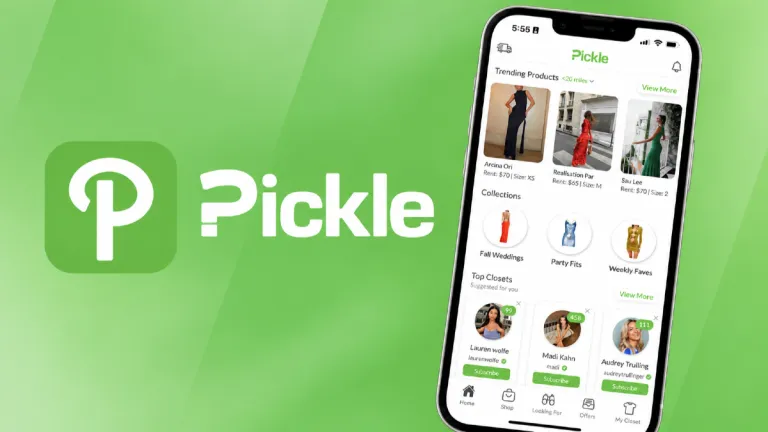
Millions of people own wardrobes filled with clothing they rarely wear, while others regularly spend hundreds of dollars purchasing outfits for special occasions. A designer dress might be worn to a single wedding, an expensive jacket might only come out during one vacation, and fashionable accessories can sit untouched for months. Pickle is turning this unused inventory into an opportunity by connecting people who want to rent clothing with those willing to lend it.
Founded by Brian McMahon and Julia O'Mara, Pickle is a peer-to-peer fashion rental marketplace that allows individuals to earn money from clothes and accessories they already own. Rather than operating traditional retail stores or purchasing large amounts of inventory, the company relies on its community of users to supply the products available through its platform.
The concept is straightforward. Someone who owns an expensive dress can list it for rent, while another person who needs that dress for an upcoming event can borrow it for a fraction of its retail price. Once the rental period ends, the item is returned to its owner and can be rented again.
This approach creates financial opportunities on both sides of the transaction. Renters gain access to a much broader selection of fashion without the expense of purchasing every item, while lenders can generate recurring income from clothing that would otherwise remain unused.
What makes Pickle particularly interesting is how it combines an established sharing-economy business model with everyday consumer behavior. People have always borrowed clothes from friends and family, but Pickle makes it possible to do something similar with strangers through an organized digital marketplace.
The company has also recognized that convenience is essential. Customers can arrange local exchanges, use courier delivery in supported areas, or have clothing shipped across the United States. This flexibility makes the service practical for everything from planned vacations to last-minute social events.
Since launching its rental marketplace in 2022, Pickle has expanded beyond its original New York City audience and attracted significant investment. With hundreds of thousands of listed items and a growing community of renters and lenders, the startup is demonstrating how personal wardrobes can become part of a much larger commercial marketplace.
From a Shopping App to a Fashion Rental Marketplace
Pickle's origins date back to 2021, when McMahon and O'Mara were developing a social shopping application designed to help people get fashion advice from friends. The original concept focused on making online shopping more interactive by allowing users to share potential purchases and receive feedback from people they trusted.
However, the founders noticed that users were doing something unexpected. Instead of simply recommending products to buy, people were offering to lend clothing they already owned. This behavior revealed an opportunity that extended beyond shopping recommendations.
The founders began exploring the possibility of building a marketplace around clothing rentals, allowing individuals to borrow items from wardrobes outside their immediate social circles. The business shifted toward peer-to-peer fashion rentals, with Pickle launching its marketplace in New York City in 2022.
During the early stages, the founders were directly involved in deliveries and other operational tasks. This hands-on approach helped them understand the challenges associated with exchanging clothing between strangers, including timing, convenience, communication, and trust.
Unlike a conventional fashion retailer, Pickle did not need to invest heavily in purchasing merchandise. Instead, its primary challenge was attracting enough lenders and renters to create a marketplace where customers could consistently find suitable items.
New York City provided a favorable starting environment because of its population density, fashion-conscious consumers, and frequent social events. Once the company established a local community, it could begin expanding the same concept into additional cities.
How Pickle Works
Pickle operates as a two-sided marketplace connecting people who want temporary access to clothing with individuals who are willing to rent out items they own. Users can browse dresses, jackets, handbags, designer accessories, and other products listed by members of the community.
Lenders create listings for their items, including photographs, descriptions, sizing information, and rental prices. Renters can then explore the available inventory, select an item, choose a rental period, and submit an offer to its owner.
Rental periods can range from one day to four weeks, giving customers flexibility depending on their needs. Someone attending a wedding might only require a dress for a weekend, while another person traveling abroad could rent clothing for a longer period.
The platform also allows users to make purchase offers on eligible items, meaning Pickle is not exclusively limited to rentals. This creates another opportunity for owners who might prefer to sell certain products rather than continue renting them.
Once an offer is accepted, both parties arrange delivery using one of the available methods. Pickle supports in-person exchanges, local courier services, and nationwide shipping, allowing customers to choose an option that suits their location and schedule.
The company earns revenue through fees associated with transactions rather than relying on a traditional subscription-based rental model. Because the inventory belongs to individual users, Pickle does not need to purchase every item offered through its marketplace.
This structure gives the business an important operational advantage. As new lenders join, the selection can grow without requiring Pickle to make equivalent investments in merchandise.
More Than 500,000 Products and $20 Million in Funding
Pickle has demonstrated meaningful growth since introducing its peer-to-peer rental marketplace. According to the company's website, the platform now features more than 500,000 products across over 40,000 individual closets, with rental services available nationwide.
The company also reports that its users have collectively saved more than $100 million in retail value by renting instead of purchasing clothing. Although this figure represents estimated consumer savings rather than marketplace revenue, it illustrates the financial proposition that Pickle offers customers.
In March 2025, the startup announced a $12 million Series A funding round co-led by FirstMark and Craft Ventures, with participation from Burst Capital and FJ Labs. The investment brought its total reported funding to approximately $20 million.
At the time of the announcement, Pickle reported more than 300,000 active users, providing evidence that the platform had already moved beyond an experimental marketplace into a service attracting substantial consumer participation.
The company has also established a particularly strong presence in Manhattan. According to figures shared by Pickle, approximately one in four women between the ages of 18 and 35 in Manhattan had used the platform, highlighting its popularity among younger urban consumers.
New York remains an important market, but Pickle has also developed a presence in cities including Los Angeles and Miami. Nationwide shipping extends the platform's reach to customers outside the metropolitan areas where local deliveries are most convenient.
For investors, the opportunity lies in expanding the marketplace while maintaining a business model that does not require Pickle to own the products being rented. Its funding provides resources to improve technology, attract additional users, and strengthen operations as the service enters new markets.
Turning Personal Wardrobes Into Income-Generating Assets
One of Pickle's strongest selling points is the opportunity for ordinary consumers to earn money from items they already own. Clothing purchases are traditionally considered expenses, with many products losing much of their resale value after being worn.
Pickle introduces a different possibility by allowing owners to rent out the same item repeatedly. A dress purchased for several hundred dollars could potentially generate rental income over multiple occasions, helping its owner recover some or even all of the original cost.
For people who regularly purchase expensive fashion, the concept can become particularly attractive. Their wardrobes may contain dozens of items that are still fashionable and in excellent condition but rarely worn.
Some lenders have developed substantial businesses through the platform. In July 2026, a New York user was reported to be generating approximately $7,000 per month from clothing rentals, while Pickle's co-founder Brian McMahon described another lender who had earned $30,000 in a single month.
These figures represent exceptional examples rather than typical earnings. Most participants are unlikely to generate similar amounts, and successful lending requires more than simply uploading photographs of clothing.
Owners must manage availability, communicate with renters, prepare items for delivery, and ensure that clothing remains in suitable condition. Cleaning, logistics, platform fees, and occasional disputes can also affect the profitability of individual rentals.
Nevertheless, Pickle lowers the barrier to entering a fashion-related business. Users do not need to develop clothing designs, manufacture products, establish physical stores, or build their own e-commerce websites. They can begin with the items already hanging in their closets.
Making Clothing Rentals Convenient Enough for Everyday Use
A peer-to-peer marketplace can only become successful if transactions are practical for both sides. Borrowing clothing from strangers presents logistical challenges that traditional online shopping does not necessarily face, particularly when customers need specific items by certain dates.
Pickle addresses these challenges by supporting several different delivery methods. In areas where local courier services are available, items can be collected from lenders and transported directly to renters, sometimes on the same day.
The company works with third-party delivery services, including Uber, DoorDash, and Roadie, to facilitate certain local exchanges. This arrangement allows customers to receive clothing without necessarily meeting the owner in person.
For users living nearby, an in-person handoff provides another alternative. The lender and renter can arrange a convenient exchange location through the application, avoiding additional shipping or courier expenses.
Nationwide shipping makes the marketplace accessible to customers outside densely populated urban centers. Renters can select delivery speeds, while lenders receive shipping instructions and labels through the platform.
The company has also developed procedures for handling returns, delivery confirmation, and potential damage. These systems are important because every transaction involves property belonging to another individual rather than inventory owned by Pickle.
Convenience becomes especially valuable for last-minute occasions. A customer who suddenly needs an outfit for a dinner, party, or professional event may find local rental options more practical than ordering something online and waiting several days for delivery.
However, maintaining reliable service across a nationwide network of independent lenders remains a challenge. Successful expansion will depend partly on whether Pickle can deliver a predictable customer experience despite the decentralized nature of its inventory.
Why Younger Consumers Are Embracing Fashion Rentals
Fashion consumption is closely connected to social occasions, changing trends, and personal expression. Weddings, vacations, birthdays, and parties frequently encourage people to purchase new outfits, even when similar clothing is already available elsewhere.
For younger consumers who regularly share photographs and videos on social media, the desire to wear different outfits can create considerable expenses. Pickle offers an alternative by making fashionable items accessible without requiring permanent ownership.
The platform is particularly relevant to consumers interested in designer clothing. Renting can provide access to premium brands that might otherwise be difficult to justify purchasing for limited use.
Pickle also benefits from the promotional potential of its community. Fashion influencers and other highly visible users can rent out pieces that followers have already seen on social media, creating demand for specific wardrobes and styles.
This dynamic is different from traditional retail marketing. The clothing itself is already owned and worn by real people, and successful lenders can attract customers through their personal style, reputation, and existing audiences.
The company also positions its marketplace as a more sustainable approach to fashion consumption. Reusing existing clothing can extend the useful life of garments and potentially reduce demand for newly manufactured items, although the overall environmental benefit depends on factors such as transportation, cleaning, and whether rentals actually replace purchases.
For many customers, however, the primary motivation may simply be convenience and affordability. The ability to access an expensive outfit for a relatively small rental payment is an immediately understandable proposition that does not require consumers to adopt an entirely new lifestyle.
Can Pickle Become a Major Player in the Sharing Economy?
Pickle is entering a competitive industry that already includes established clothing rental companies such as Rent the Runway and Nuuly. However, its peer-to-peer structure differentiates the business from services that acquire and manage significant amounts of inventory.
Rather than deciding centrally which products customers should be able to rent, Pickle allows its users to determine much of the available selection. This can result in a constantly changing marketplace featuring established designer labels, emerging fashion brands, and individual pieces that might not appear in conventional rental catalogs.
The business also has the potential to benefit from network effects. More lenders create additional inventory and greater selection, which can attract more renters. Increasing customer demand can then encourage additional wardrobe owners to join the marketplace.
Achieving this balance will be particularly important in new cities, where an insufficient selection of nearby items could limit the appeal of local exchanges. Nationwide shipping helps address this challenge, but fast local access remains one of Pickle's distinguishing features.
The founders have also discussed opportunities beyond traditional fashion rentals. Categories such as cameras, hair tools, and luggage suggest that the same marketplace infrastructure could eventually support a broader range of products people occasionally need but do not necessarily want to own.
Such expansion would introduce additional operational challenges, including different handling requirements and product protection considerations. Nevertheless, it demonstrates how the underlying business model could extend beyond dresses and accessories.
With more than 500,000 listed products, over 40,000 closets, and approximately $20 million in reported funding, Pickle has established a meaningful position in the peer-to-peer rental market.
Its long-term success will depend on maintaining trust, improving convenience, and attracting enough renters and lenders to support continued growth. If the company can achieve that balance, it could help make renting fashion as familiar as buying it online.
For a startup that originally focused on helping people make shopping decisions, Pickle has developed into a marketplace built around a much larger opportunity: turning the clothing people already own into products that can generate value again and again.