
Roost Surpasses One Million Users With a Messaging App That Deliberately Slows Down Texting
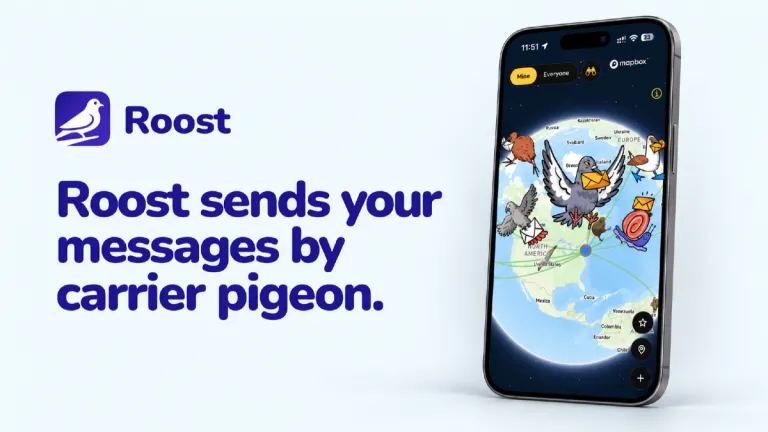
At a time when messaging applications compete to deliver conversations faster, American startup Roost is attracting attention by doing the opposite. Instead of instantly delivering texts, the app sends messages using virtual birds that travel across a real-world map, turning an ordinary conversation into a journey that can take minutes, hours, or even days.
The unusual concept has helped Roost become one of 2026’s breakout social applications. Launched in April by Logan Mendelsohn, a product manager who initially developed the idea during his spare time, Roost attracted more than 250,000 users within its first three months. By October, the company was advertising more than one million users worldwide, an impressive reported milestone for a project that began without a major advertising campaign or outside investment.
Behind the playful design is a serious attempt to rethink how people communicate online. While most social platforms encourage immediate responses and constant engagement, Roost introduces anticipation into everyday conversations, encouraging people to reconnect with the experience of waiting for a message.
A Decade-Old Joke Becomes a Startup
The original idea for Roost emerged more than a decade before the application launched. While backpacking through Europe with college friends, Logan Mendelsohn began joking about how amusing it would be to communicate with people back home using carrier pigeons instead of conventional messaging services.
The idea was deliberately impractical. A message that could normally arrive in seconds would instead take considerably longer, with the delivery time determined by the distance between sender and recipient. What started as a humorous conversation remained in Mendelsohn’s mind for years before he eventually decided to turn it into a working product.
Mendelsohn grew up in a family of birdwatchers and developed an early familiarity with birds. His parents owned an African grey parrot named Bingo, which he later jokingly described as his older brother during an interview with GamesBeat. Although that background wasn’t the sole inspiration for the application, it helped shape the bird-themed world that would eventually become Roost.
Professionally, Mendelsohn worked in technology product management, including trust and safety responsibilities at Ticketmaster. His experience with online platforms would prove useful when developing an application that allowed people to communicate with both existing friends and strangers.
Development began in May 2025, when Mendelsohn started working on Roost as a side project while maintaining his full-time job. Initially, he intended to build something entertaining for himself and his friends rather than establish a large social media company.
The project gradually evolved into an application that combined messaging, virtual animal collecting, and casual gaming. Friends who tested the early version encouraged Mendelsohn to release it publicly, while demonstrations shared through short-form videos suggested that the unusual concept could appeal to a much larger audience.
On April 28, 2026, Roost officially launched for iPhone, with an Android version following afterward.
How Roost Turns Text Messages Into Virtual Deliveries
Roost is a free messaging application that replaces instant delivery with virtual couriers. Rather than sending a message directly to someone’s phone, users choose a bird or another animal to carry it across a digital map based on the actual geographical distance between them.
Getting started involves downloading Roost Social, creating an account using Apple or Google, and connecting with friends through usernames. Users can also opt into a pen pal feature that introduces them to new people within their own age group.
Once connected, sending a message is straightforward. A user writes a text, selects one of their available virtual couriers, and receives an estimated delivery time before sending it. The animal then begins moving across the map, with its journey progressing according to the distance involved and its individual speed.
For example, someone in New York could send a message to a friend in London using a virtual pigeon. Instead of arriving immediately, the message would begin a simulated journey across the Atlantic Ocean. Depending on the courier selected, the journey could take days, during which the sender could open the app and follow its progress.
Sending a message to someone in the same city might take only a few minutes, while choosing a particularly slow animal could dramatically extend the waiting period. Snails and turtles are among the available couriers, allowing users to deliberately make their messages travel even more slowly.
Once a courier reaches its destination, the recipient receives a notification and can read the message. Responding requires sending another animal back, creating conversations that unfold over time rather than through continuous exchanges.
Users don’t need to keep the application open while their messages travel, and Roost displays the expected arrival time before each delivery.
The platform supports more than ordinary text. Friends can exchange photographs, drawings, voice messages, and GIFs, while private group conversations called Nests allow up to 20 people to communicate using the same delayed-delivery system.
The Bird Collection That Makes Messaging a Game
Although delayed communication is Roost’s defining feature, the application also incorporates a substantial collecting and gaming experience.
Users can acquire more than 1,000 species of virtual couriers, including familiar birds such as pigeons, owls, parrots, and puffins, alongside more unusual animals such as bats, turtles, and snails. The collection also includes extinct species, allowing players to discover animals they would never encounter in everyday life.
Each courier has its own characteristics, including speed and rarity. Animals are divided into seven rarity categories, ranging from Common to Celestial, while new species can be obtained through rewards, special events, and optional purchases.
Players maintain their collections in a virtual home called a Rookery, where they can name their animals and choose which ones to use for deliveries. A separate collection log called the Codex records discovered species and provides factual information about them.
Roost also introduces progression through training. Players can participate in short arcade-style minigames that improve their couriers’ experience and speed, making trained animals capable of delivering messages more quickly.
This creates an interesting relationship between the application’s two main activities. Sending messages helps users engage with their collections, while collecting and improving birds changes how future conversations work.
Another feature, the Passport, rewards exploration. When a bird reaches a new country, it can earn a permanent stamp recording the destination and journey. Someone who regularly exchanges messages with international friends can gradually build a collection of countries visited by their couriers.
These features make Roost more than a novelty messaging application. The combination of communication, collecting, and casual gaming gives users reasons to return even when they aren’t actively exchanging messages.
A Viral Social Media Moment Changes Everything
Roost’s early growth provides one of the most compelling parts of its startup story.
Mendelsohn began introducing the concept through short-form videos, demonstrating how virtual birds could carry messages between locations. The unusual idea was immediately understandable, making it particularly suitable for platforms where viewers decide within seconds whether to continue watching.
However, one of Roost’s biggest breakthroughs came from an ordinary user’s social media post rather than a planned marketing campaign.
In June 2026, a mother shared a post on Threads describing how her daughter and her friends were using Roost to communicate with one another in Elizabethan English. The combination of deliberately old-fashioned language and virtual carrier pigeons proved entertaining enough to spread widely online.
The resulting attention caused Roost’s user base to grow from approximately 10,000 to 100,000 users in just three days, according to figures reported by TechCrunch.
Growth continued as more people discovered the application through TikTok, online communities, and recommendations from existing users. By early July, GamesBeat reported that Roost had surpassed 250,000 users and was handling more than 100,000 active conversations each day.
In a subsequent LinkedIn post, Mendelsohn outlined the speed of that early expansion. According to his figures, Roost grew from just 10 users during its first week to 1,000 in its second week, 100,000 by its sixth week, and more than 400,000 after eleven weeks.
By August, Mendelsohn was publicly discussing an audience exceeding 700,000 people, while coverage from major publications brought the application to an even broader international audience.
Roost’s official website now advertises more than one million users, although that latest milestone remains a company-reported figure rather than an independently audited count.
The rapid adoption is particularly notable because Mendelsohn told GamesBeat in July that he had spent no money on paid advertising or customer acquisition. Instead, Roost’s initial growth came primarily from organic content, recommendations, and people sharing their experiences with the unusual application.
Building a Social App Without Venture Capital
Roost is operated by Good Egg LLC, with Mendelsohn serving as its creator and founder. Unlike many consumer technology startups pursuing rapid growth, the application began without a publicly announced venture capital investment.
In July 2026, Mendelsohn told GamesBeat that he intended to continue financing the business through its own revenue rather than immediately seeking outside investors.
The startup generates income through optional in-app purchases, including collectible birds, mystery packs, cosmetic customizations, and upgrades to users’ virtual environments. Players can also subscribe to Roost Supporter, a premium membership offering additional benefits.
The Supporter membership provides features such as additional energy for training activities, expanded pen pal options, exclusive collectibles, and cosmetic rewards. Roost has also offered a lifetime membership for users who prefer a single payment instead of an ongoing subscription.
Importantly, the core messaging experience remains free. Users can communicate with friends, exchange pen pal letters, and collect animals without purchasing a subscription, while paying customers receive additional customization and progression options.
This model allows Roost to combine elements of a messaging service with the commercial approach commonly found in casual mobile games. Rather than charging users for basic communication, it monetizes optional features associated with collecting, personalization, and entertainment.
Mendelsohn has also expressed interest in expanding the team, particularly to strengthen the gaming elements of the application as its audience grows.
A Different Approach to Social Media
Roost’s popularity arrives during a period when many users are increasingly conscious of how much attention their phones demand.
Conventional messaging applications are built around speed and convenience, allowing people to communicate almost instantly regardless of geographical distance. Social networks often add an endless supply of posts, notifications, and recommendations intended to encourage frequent engagement.
Roost takes a different approach by making delayed delivery part of the experience rather than treating it as a technical limitation.
The result is a communication system where conversations develop more slowly and messages can feel closer to receiving letters than exchanging ordinary texts. Users can still communicate regularly, but the application doesn’t create the same expectation that every message will receive an immediate response.
Roost also avoids the conventional endless public feed found on many social platforms. Its central experience revolves around direct conversations, private groups, and pen pal relationships rather than an algorithmically selected stream of public content.
The concept belongs to a broader category sometimes called slow technology, which describes digital products designed to encourage more deliberate interactions rather than continuously competing for attention.
Roost is not the first application to experiment with delayed communication. Slowly, a pen pal application launched in 2017, also uses geographical distance to determine how long digital letters take to arrive.
However, Roost differentiates itself by combining that approach with animated journeys across a live map, collectible couriers, training minigames, and group conversations. These additions turn the waiting period into an interactive experience instead of simply delaying access to a message.
For younger users in particular, the combination of familiar mobile gaming features and an unconventional messaging system creates an alternative to traditional social networking.
Trust, Safety, and the Challenges of Rapid Growth
Mendelsohn’s professional experience in trust and safety has influenced several of Roost’s design decisions.
The application requires users to authenticate through Apple or Google, while connections between friends must be accepted before direct conversations can begin. Its pen pal system also separates users into age groups, preventing minors from being automatically matched with adults.
Roost limits the personal information shared through pen pal interactions and restricts the exchange of contact details and photographs within those conversations. The platform also offers blocking, reporting, and content moderation features intended to reduce inappropriate interactions.
Location information receives particular attention because Roost’s central concept depends on showing couriers traveling between geographical destinations. By default, profiles reveal only a general city location, with more precise sharing available through explicitly selected privacy settings.
The app encrypts messages during transmission and storage, although it does not currently provide end-to-end encryption.
Roost has also encountered criticism over its use of artificial intelligence. As the application gained attention, some users objected to AI-generated artwork used for virtual birds, arguing that the illustrations should be created by human artists.
Mendelsohn acknowledged the concerns and began exploring ways to involve artists in replacing the original illustrations. He also explained that AI-assisted programming had played an important role in allowing him to build and maintain a comparatively complex application as an independent developer.
The situation illustrates some of the challenges that can accompany rapid growth. A small project initially created for friends can suddenly become a public product serving hundreds of thousands of people, bringing new expectations around design quality, safety, and community involvement.
From Side Project to Million-User Social Platform
Roost’s development is an unusual example of a consumer application attracting a large international audience without beginning as a conventional venture-backed startup.
Mendelsohn started with an idea that sounded almost deliberately unsuitable for modern communication: sending messages through virtual carrier pigeons and making people wait for delivery.
By combining that simple concept with collectible animals, live tracking, casual games, and social features, he created a product that users could understand immediately while still discovering additional activities over time.
Its growth demonstrates the potential of products whose defining features are interesting enough to generate their own publicity. A short video showing a pigeon carrying a digital message across the Atlantic can communicate Roost’s central appeal more effectively than a lengthy explanation of its technical capabilities.
The startup’s future development will involve expanding its social and gaming features while maintaining the experience that attracted its first users. Its growing international community provides opportunities for additional collectibles, events, and ways for people to interact across geographical boundaries.
In a market dominated by increasingly sophisticated messaging services, Roost has achieved attention by making something familiar feel unexpectedly different. Instead of competing to deliver messages another fraction of a second faster, it has turned the journey between sender and recipient into the reason people use the application.
What began as a joke between college friends has become a messaging platform with more than one million users reported worldwide, suggesting that even in an age of instant communication, there is still an audience willing to wait for something worth receiving.