
Status Built a Social Network Where You Can Be Anyone — 3 Million People Joined
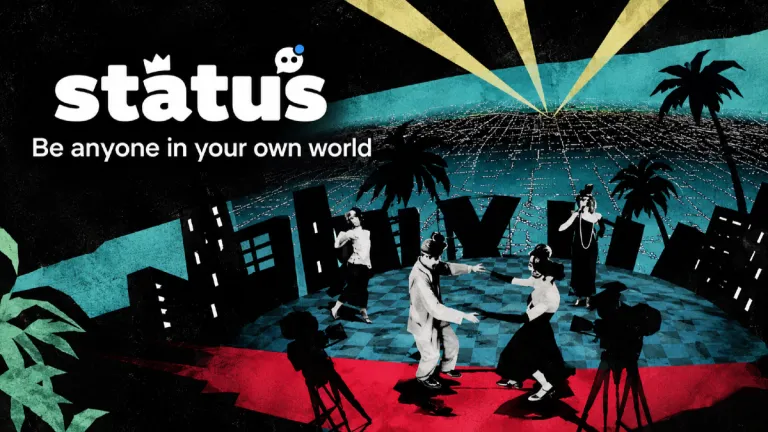
Most social networks ask you to follow other people. Status had a different idea: what if the entire social network existed around you?
Status is a social role-playing app where you create a persona and enter fictional worlds filled with AI characters. Those characters post, reply, send messages, form relationships and react to what you do. You can become famous, step into the world of a favorite story, create an entirely new character or simply see what happens when an imaginary version of yourself gets dropped into a social network.
The easiest way to understand it is to imagine a life-simulation game combined with social media. Except instead of watching someone else’s life unfold, you become the main character yourself.
And millions of people apparently wanted exactly that.
They tested the idea before they built it
Status was created by the team behind WishRoll, led by Fai Nur alongside co-founders Amit Bhatnagar and Pritesh Kadiwala. The team already had experience building apps for young internet audiences. One of its earlier products, the music-sharing app Kiwi, reached more than two million downloads.
But before fully building Status, the team tried something unusually simple.
They created images showing what the app could look like and posted them on TikTok. There wasn’t a finished Status app behind those images yet. They were testing whether people would actually be interested in the idea before committing to building the whole thing.
The response was huge. The early concept spread quickly on TikTok, giving the team a strong indication that people wanted the product.
That interest continued after Status became a real app. The company says it reached one million users in just 19 days.
Your followers don’t have to be real
When you open Status, you aren’t simply given another empty social media profile and told to find people to follow.
You choose who you want to be and the type of world you want to enter. It could be based around an existing fandom or a completely new scenario. AI characters then populate the world and begin behaving like people on a social network.
They post. They reply to you. They send private messages. They remember previous interactions and their relationships with you can change depending on what you do.
Your character can gain followers, make friends, develop rivalries and become involved in fictional online drama. Your reputation can rise or fall as the story develops.
It creates an unusual reversal of conventional social media. On Instagram, TikTok or X, you publish something and hope somebody notices.
In Status, the world is designed to notice you.
Real people can play together too. Status added a multiplayer mode that allows friends to enter the same fictional world, interact with each other and create stories together alongside the AI characters.
People aren’t just trying it
Getting someone to download an unusual app is one thing. Getting them to keep coming back is much harder.
Status appears to have managed both.
The company that helped Status reduce the cost of running its AI says the app has surpassed 500,000 daily active users, with users spending an average of one hour and 36 minutes playing each day.
The early growth was already showing signs of something unusual. During an early test version, attention on TikTok helped drive more than 100,000 downloads. Its Discord community grew from around 100 members to more than 180,000 within days.
The amount of content created inside Status has become enormous as well. By May 2026, the company said users had created more than 13 million worlds and more than five million character profiles.
Status has also started turning all that attention into revenue. The app is free to play, but actions use energy. Players can get additional energy through subscriptions, purchases and advertising.
Nur said Status increased its revenue tenfold during the first quarter of 2026 and was generating millions of dollars in yearly subscription and purchase revenue.
Going viral created an expensive problem
Status also discovered one of the less obvious problems with building a social network filled with AI characters.
Those characters aren’t free to run.
Every time hundreds of thousands of users post something, receive a reply or interact with a character, computers have to generate those responses. As Status grew, the cost of producing all those interactions became a serious problem.
The company needed to find a way to make each interaction dramatically cheaper without making the characters noticeably worse.
Status worked with AI technology company Inworld to change how those responses were generated. Instead of using the same expensive process for everything, different types of interactions could be handled in different ways.
According to Inworld, those changes reduced Status’s AI costs by around 95 percent while allowing the app to support more than 500,000 daily users.
In other words, going viral wasn’t the end of the challenge.
Status had to figure out how to afford its own success.
$17 million to build something bigger
Investors noticed the growth.
In May 2026, Status announced that it had raised a total of $17 million across two investment rounds. Its investors include Abstract, General Catalyst, Union Square Ventures, Y Combinator and LightShed.
The money gives Status more room to expand, but the most interesting part of the company isn’t the funding.
It’s what people are actually doing with the product.
For years, social networks have been built around watching other people’s lives. You follow celebrities, creators, friends and strangers and scroll through whatever they decide to share.
Status turns that idea around.
Instead of watching somebody else’s story, you create a world in which you become part of the story yourself. The people reacting to you might not even be real, but the millions of people choosing to play apparently don’t mind.
Status started as an idea shown through a few images on TikTok.
It has since become a social world where millions of people can be almost anyone they want.